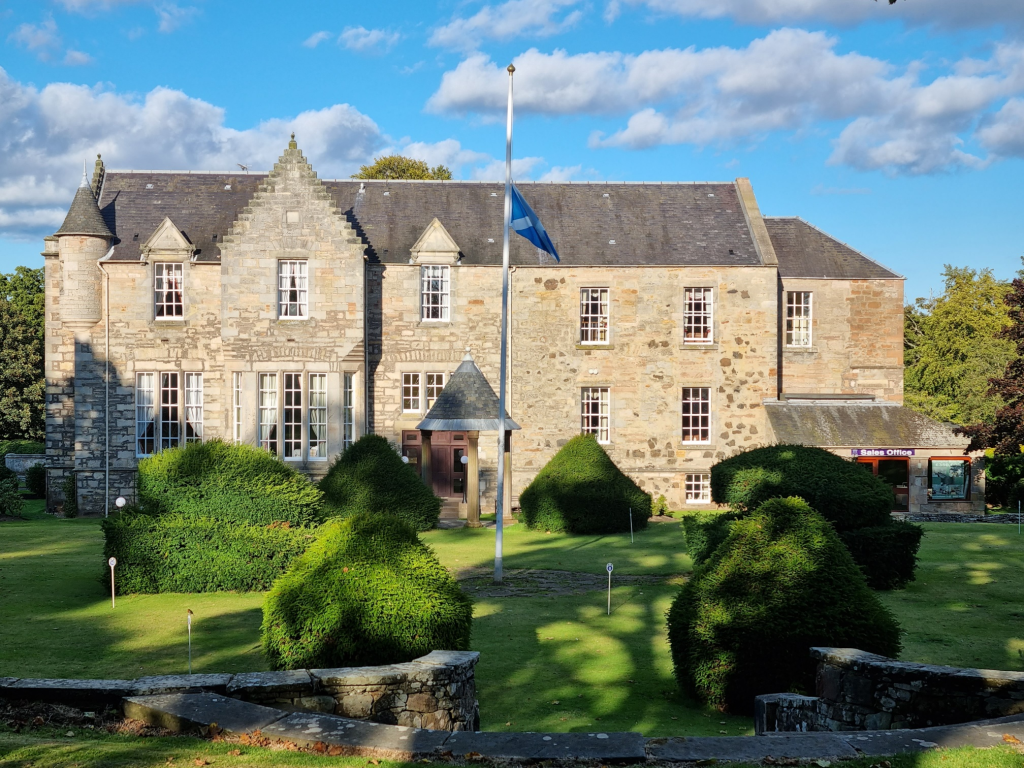
IT IS, in effect, the last stop on the road; the driving holiday that began 17 days ago with a 90-minute departure fiasco in leaving the London suburb of Chiswick to kickstart the longest trip to Kent in recorded history has brought me to tiny Kilconquhar, in Fife, in south-eastern Scotland.
Tomorrow I head to Edinburgh, where — after a night in that august town — I will hand my hired Hyundai Ioniq back to the good burghers at Europcar, and board my British Airways flight to London for a final 42 hours in my equal favourite city in the world.
I think readers got the picture yesterday that I wasn’t too impressed with Aberdeen; oh, I’m sure it’s a great place, and certainly the people I met there were friendly enough. But it’s bleak: aesthetically depressing, with lots of drab grey buildings, and not a lot to recommend it. Even the list of “Aberdeen’s Top Attractions” left in my room by the serviced apartment manager had just six nondescript items on it.
Yet after I hit the road this morning to head to Dundee, and thence into Fife toward Kilconquhar, everything changed very quickly: see below for an example of the views that rapidly sprung forth as I left old Aberdeen behind.
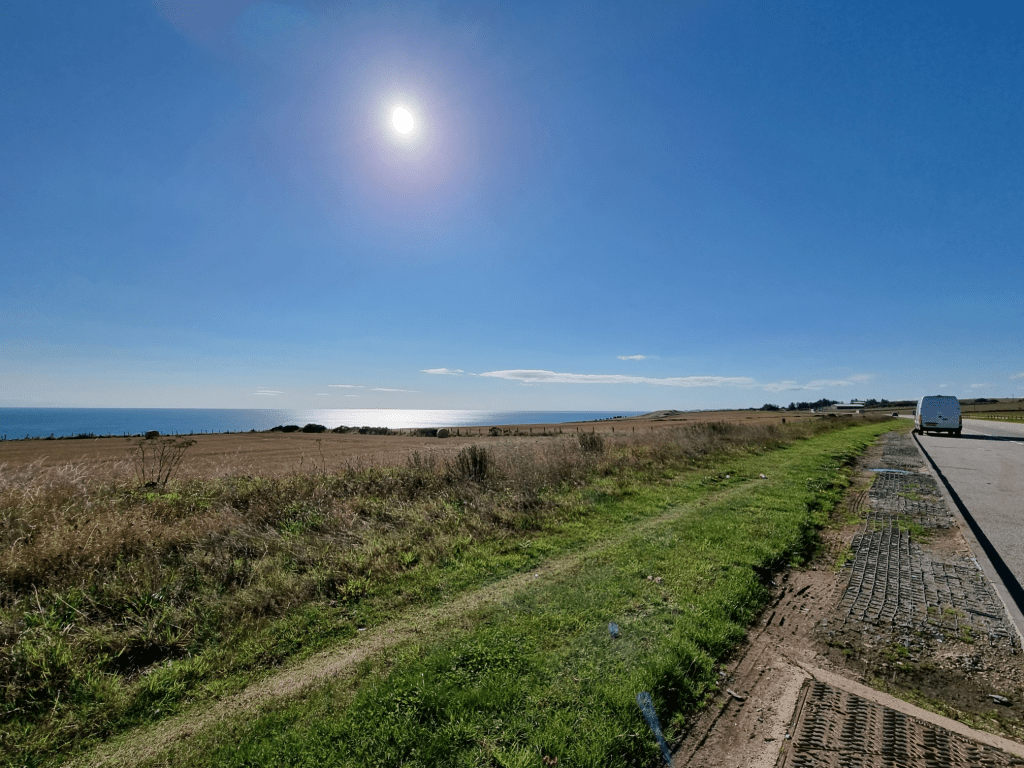
At some point tomorrow morning (and not long after I start driving), I’ll pass the 2,000 mile (3,200 kilometres) mark for this trip; I have often said Britain is bigger than it looks, and by the time the car is handed in at Edinburgh Airport on Thursday, there will likely be another 150 miles or so added to that. My 2008 visit to the UK, which featured a similar road trip (going to mostly different places than I’ve been this time), clocked up 2,320 miles, so the distances covered are close to identical.
And one will say something nice about the lad from Europcar, who I was certain was trying to pull something shifty when I picked the car up; claiming to feel bad because he made me wait (it was to go to the toilet because he’d had “a bad curry” two days earlier), he charged me an additional £15 per day for the hybrid, which was unexpectedly available (still a discount of about £20 per day on that model) on the basis it’d save me hundreds of pounds’ worth of fuel.
He was right: I will have spent £300 on fuel in total, plus the extra £285 for the car; a conventional car (like the Vauxhall Astra I was apparently to be given, instead of the Fiat I’d reluctantly booked) would have used at least £1,000 in petrol, so whichever way you cut it I’m about £400 better off: nothing to be sniffed at, to be sure.
Anyhow, my final night on the road (which is what it is: Edinburgh tomorrow is the end of the line) has taken me to the tiny, charming hamlet of Kilconquhar, in Fife; I am indebted to a friend in South Carolina for planting the seed (and she knows who she is), for tomorrow morning before I head back down to Edinburgh, I’m off to a little seaside spot called St Monans — also known as St Monance — to get photographs.
Both of us thought the place looked stunning, so I’m getting the pictographic evidence, and I’ll share it with my readers as well as with her. St Monan’s is only a few miles from Kilconquhar, so with luck it will only take about 5-10 minutes to get there. But we’ll see.
Most of the drive down from Aberdeen was uneventful, and smooth sailing; I even made it through the labyrinth that passes for through roads in Dundee without any problems, eventually emerging onto the Tay Road Bridge. But as has happened so often on this trip, a turnoff initially toward St Andrews (to which I didn’t go) heralded the start of more micro-roads, unsigned turns, and trial-by-error navigation.
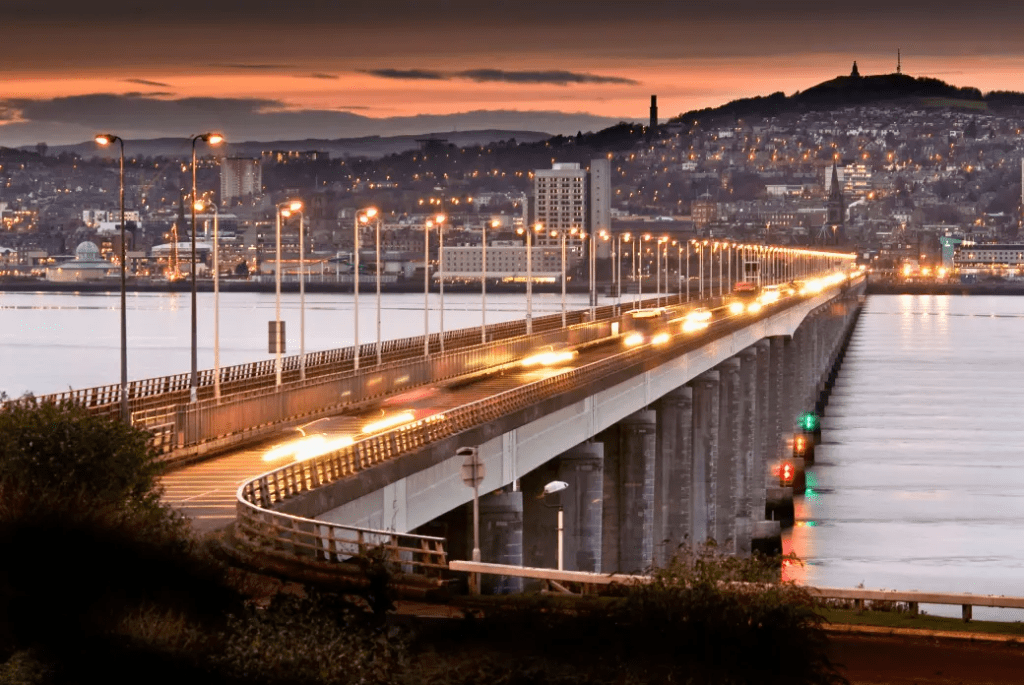
Don’t get me wrong: I’ve enjoyed the slightly anarchic flavour these roads have imbued my trip with; the uncertain prospect that each little turn eschewed, or every missed crossroad, was actually the correct decision. Yes, they’re slow, difficult to navigate, and potentially dangerous, but they add another colour to a driving holiday that six lanes of traffic travelling at 70 miles per hour simply can’t compete with.
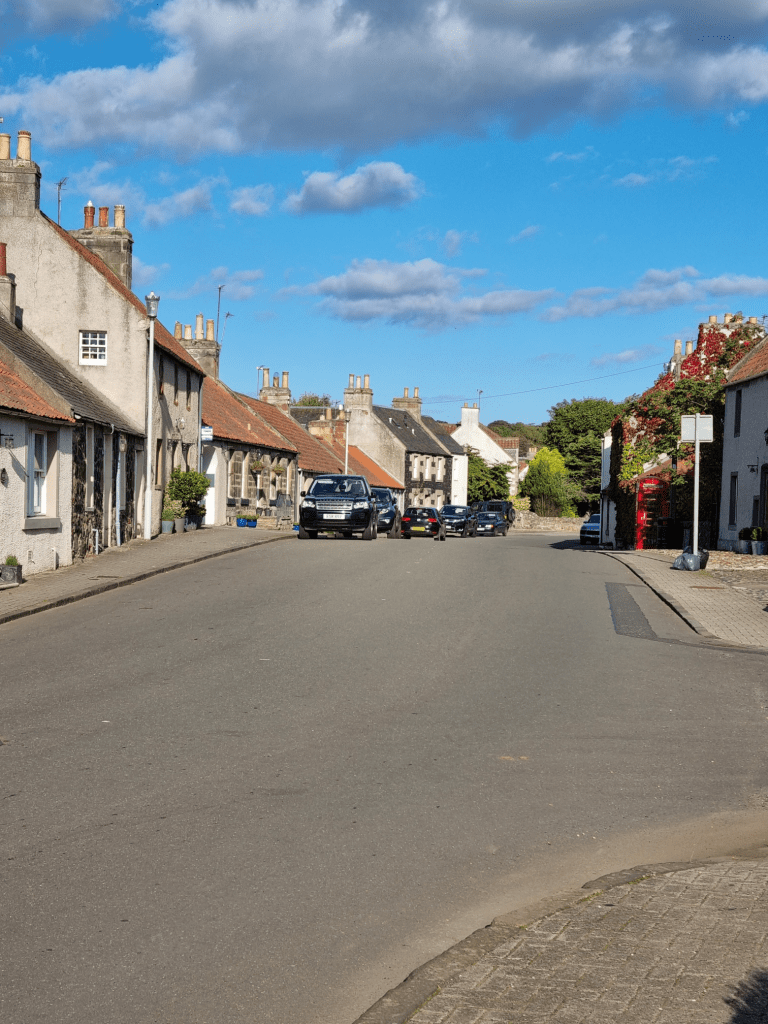
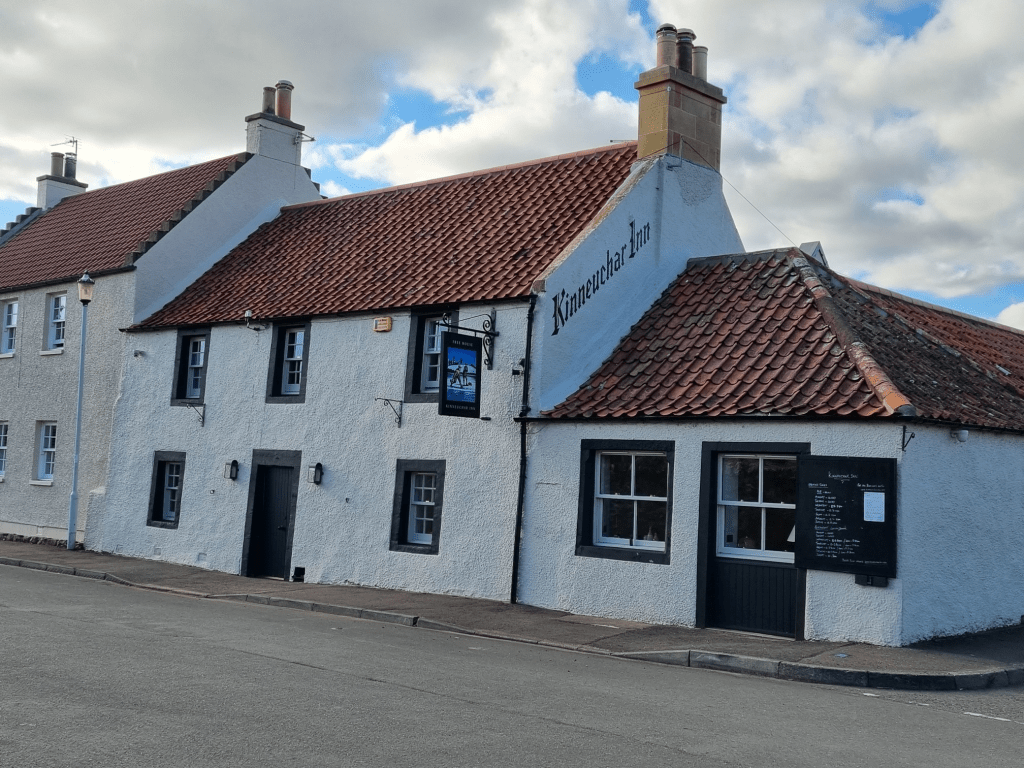
The charming little village of Kilconquhar (and it is little, as one can see above) is — despite being in Scotland — almost the stereotype of a little English country town; one street, one pub, a church, a couple of other small businesses, and a road in and out. It sits on the shore of an eponymous lake — Kilconquhar Loch — which is visible through the graveyard of the church, as I found out this afternoon while wandering through the township to see what’s there.
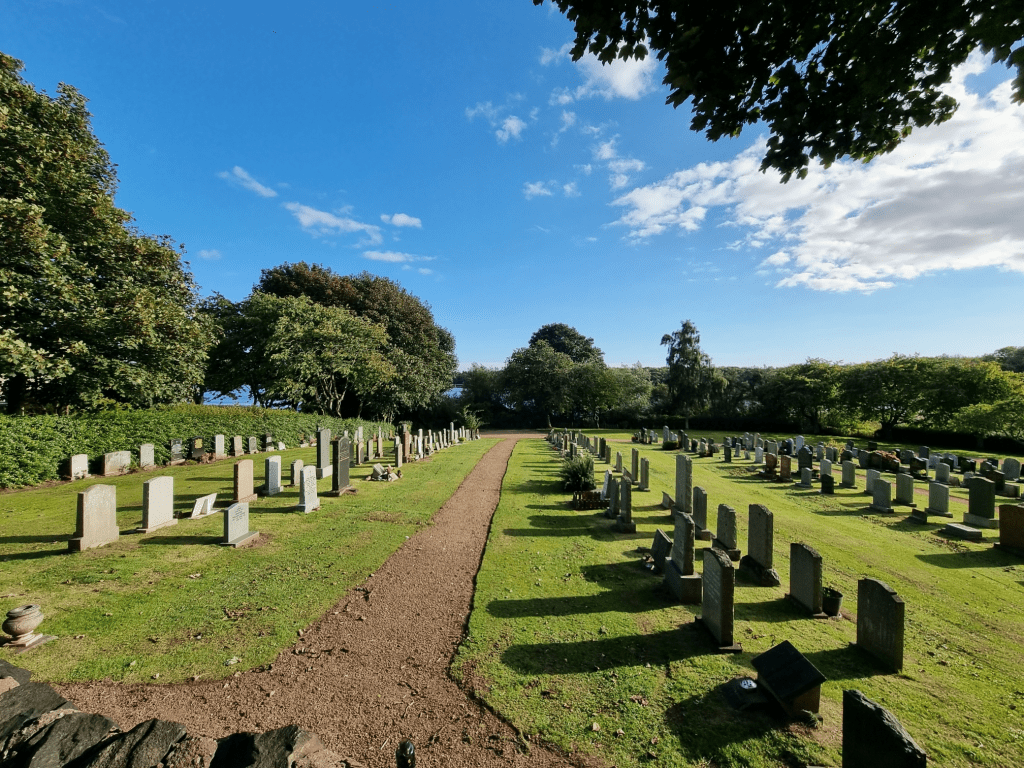
The fact is that thousands of these little villages and townships are scattered across Britain; unlike some of the tiny country towns in regional Australia that have become derelict, as people have drifted toward the coasts, most of these are vibrant, well maintained, and engender tremendous loyalty from their residents. The need to regularly travel further afield for provisions is regarded as a mere fact of life, and accepted without quibble (for example, the guy who runs the Foyers Bay Country House, where I stayed a couple of days ago, told me he goes to Inverness for supplies “most days:” a more onerous undertaking than jumping in the car and going to the local Coles).
Anyhow, that’s where we’re at for today; I’m very tired again, as lots of driving (with great attention required) and lots of walking are having their combined effect.
But I’m not complaining: I signed up for it, and it’s just what I wanted. I feel better than I have in some time, and well rejuvenated. As I said last night, I’m ready to go home (even though a big part of me wants to stay here too), and that’s a good thing, and for all the right reasons.
I’ll post again tomorrow when I’m in Edinburgh: hopefully with some very pretty pictures of a very pretty seaside town. If the mission to St Monans is a success, that is 🙂
 Return To Britain 2022