-
A Happy, Lazy, Well-Spent Day in Glasgow
I’m happy to report that in the big scheme of things, I haven’t actually done much today: although thinking back on that statement, I suppose I might have. I’ve just enjoyed being in Glasgow; there’s been nowhere to go, nobody to see and nothing to do that I haven’t wanted to. I’m tired but satisfied, and of course the adventure continues further north tomorrow.
If there’s a place in Britain outside London that lends itself to just ambling around and seeing where one ends up, it’s Glasgow; not too labyrinthine and not too structured, Glasgow is good for meandering and pottering. If you want to look at something, you can; if you want to stop for coffee or something to eat, you can; if you want to go shopping, you can do that too. I’ve done some of all of this today, happy for a break in my road trip, although another — a weekend on the whisky nirvana of Islay — awaits in two days’ time.
I shared with readers last night my excursion to the retail shop from which a large purchase of tweed was investigated yesterday; I should have named the store — it’s Walker Slater, with stores in Glasgow, London and Edinburgh, although it sells internationally online, and staff are happy to take calls from overseas to answer questions before orders are placed.
I would encourage anyone interested in fashion and/or looking good to give tweed a chance, and give Walker Slater the opportunity to make that happen. Have a look at their stuff; it’s absolutely gorgeous, and they cater to ladies as well as men. As an aside, the only aspect of my dealings with them to date that pissed me off was their flat refusal to sell and freight to Melbourne a tweed-covered three-seat English Oak sofa in their Glasgow store to which I took a liking. Surely such a request was reasonable? 🙂

Me at Walker Slater in Glasgow in the coat I’ve bought, with a shirt similar to those I bought in Yorkshire on Sunday. Anyhow, I spent longer than I should have at Walker Slater today. Between continuing to roam the shop looking for things I should either buy or try on before I head off tomorrow, and speaking to my parents in Australia before their bedtime about things that might be good for my two kids (who are also my parents’ only grandchildren), I think I was there for a solid two hours — and between what was bought yesterday and what was added to it today, there’s close to £1,000 in tweed products on its way back to Melbourne: some of it in my suitcase; most of it in the safe hands of Britain’s Royal Mail. It might even beat me home.
And — happily enough — if I’ve forgotten anything, or get the urge to buy more, Walker Slater’s Edinburgh store is a ten minute walk from where I’m staying next Wednesday night. Splendid!
The downside to all this time buying new clothes is that having decided overnight to get my Glasgow Coat of Arms tattoo — the bird, the tree, the bell, the fish — and having forgotten to ring the tattoo place before I headed out, when I went there after my visit to Walker Slater, the tattoo artist was booked out for the day. So perhaps that particular decision was made for me, in a sense, although I don’t have to get my car out of the car park tomorrow until 3pm despite hotel checkout being at 11am, so you never know…it may indeed be that if I don’t change my mind this happens on my return to Melbourne, although I do think there’s something to be said for getting a Glasgow tattoo in Glasgow. Watch this space.
Thus thwarted, I grabbed my work computer and headed to a cafe I found on the bank of the River Clyde, and did some work my boss messaged me with for an hour or two; the coffee in Glasgow is at least passable (remembering we’re spoilt for it in Melbourne) and I drank too much of it, safe in the knowledge that if anything went wrong in the world then just upstream — in the Firth of Clyde — one of Britain’s Trident submarines would be lurking out of sight, armed with up to 16 five megaton nuclear warheads with a range of 9,000 miles. Who wouldn’t feel safe?
But most of the day, as I indicated at the outset, was just spent wandering, ambling, meandering, happy to be in Glasgow and with nary a care in the world for once. One job yesterday’s field trip around Glasgow revealed was that my comfortable old brogues had reached the end of their useful life: I knew the soles had worn very thin, but the rain yesterday scored me a right shoe full of water. A ridiculous sale at a retailer in Glasgow got me more than serviceable replacements for £50 — a 50% discount off marked price — and so really, I’m going home with an awful lot of new stuff too.
And seeing I’m always very happy to endorse good businesses (which I do unsolicited and without notice to the business in question: it’s purely my own recommendation), dinner was a splendid find: Amore Ristorante Pizzeria, just outside Glasgow’s Merchant City precinct.

If you’re in Glasgow and looking for an excellent place to eat, pick this. Inexpensive, good food, large portions. I’m happy to eat something other than traditional Scottish fare in Glasgow; I know the week ahead will be filled with venison, grouse, salmon, and all the other delicious things produced in Scotland, particularly in the north and in the clean, cold waters around it.
I made an error last night in picking a place masquerading as an Italian restaurant, which even arrogated to itself an Italian name (which will not be mentioned in this post): suffice to say the fare on offer was food-grade effluent, a waste of money, and an affront to the cuisine it purported to peddle. The only thing missing, thankfully, was a case of botulism.
So readers will appreciate that attentive, smiling service in pleasant surrounds counts for much; most will also appreciate that a “starter portion” of mussels in a rich, garlicky tomato and onion sauce with garlic bread — for £8.95 — raised an eyebrow when it arrived at my table with 29 mussels (and a further three that didn’t open, which should always be regarded as inedible). Incredulous at the generosity of the serve, I wolfed it down. It was nothing short of sensational.

Mussel starter at Amore Ristorante Pizzeria, Glasgow: before… 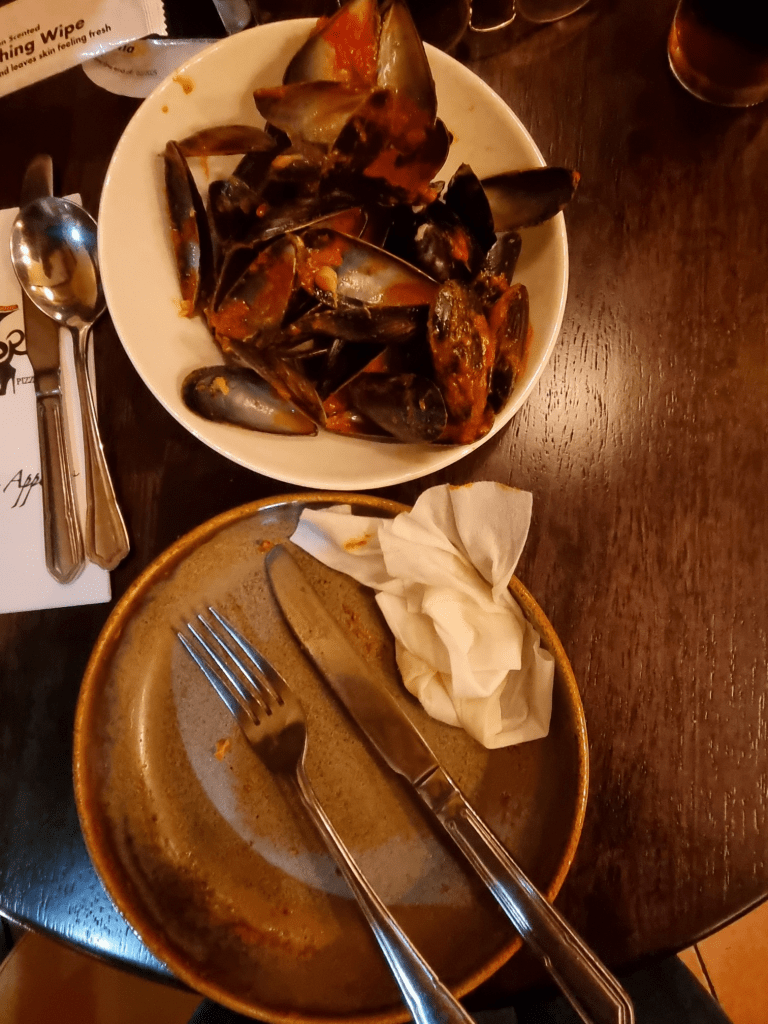
…and after… A main course of traditional lasagna was more realistically portioned, but generous nonetheless; containing pieces of real beef and topped with real parmesan (not that awful dried stuff some of these places inflict on their customers), it too passed with flying colours.

Lasagna at Amore Ristorante Pizzeria: the parmesan is finely grated, not the dried stuff, despite its appearance. But dessert…ever since I discovered tiramisu in Melbourne’s “Little Italy” — Lygon Street in Carlton — in the mid-1990s, I have rarely not ordered it when it appears on a menu; this could have been sensational, but there was little (if any) booze in it, the Cottee’s (or similar) chocolate syrup over it was a tacky and unnecessary addition that detracted from the dish, and mint sprigs — as renowned British food critic Matthew Fort has oft opined — should never appear on a plate as in most contexts, they’re inedible.

Supermarket chocolate syrup is a tacky and unnecessary addition to a fine dessert like tiramisu. So eight out of ten for this: a splendid dinner to end a lazy, happy day in my family town.
And deep regret that tomorrow, it’s time to move on from here.
AND ANOTHER THING: it’s funny what you find in supermarkets these days; I went to Sainsbury’s this afternoon to buy additional bags of Bassett’s Jelly Babies for my kids as I’m stockpiling them (the BEST jelly babies in the known universe): £1-£1.50 at retailers in Britain for a 190g bag; $8 (£4.70 at today’s rates) for the same thing in Australia if you can ever find it. Anyhow, check this out.

59p buys you more of a mouthful than you might have bargained for at Sainsbury’s. 59p at Sainsbury’s.
No words.
And suffice to say, I didn’t buy it…
-
Things To Do: From Bins Enjoying Views to Glasgow
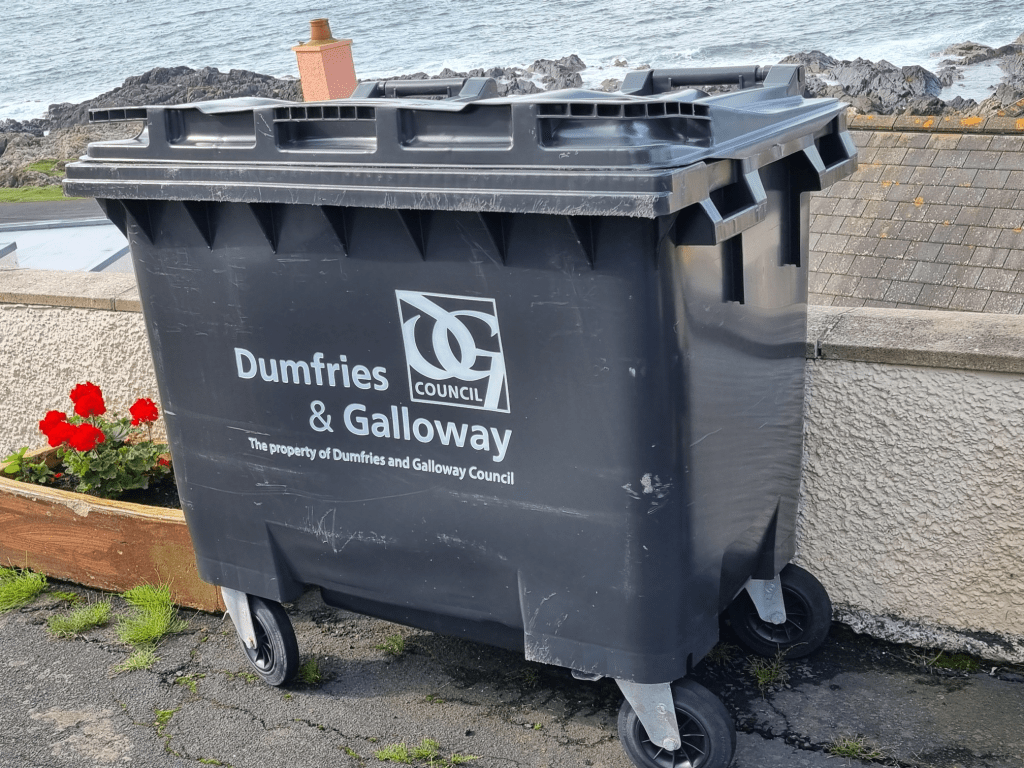
SCOTLAND is a seriously beautiful country: even the bins enjoy the views, as observed in Portpatrick this morning. OK, maybe this attempt at humour wasn’t the best: I’ll plead exhaustion, for today has been an undertaking conducted on about five hours’ sleep; between some work late last night and again this morning, my day was further interrupted by a plumbing problem at the place in Portpatrick I was staying at, and by the time I got out — and after snapping some waterfront pictures I couldn’t take yesterday, as the glare from sunset over the water would have rendered them useless — it was near lunchtime before I got on the road to Ayr, and thence to Glasgow.
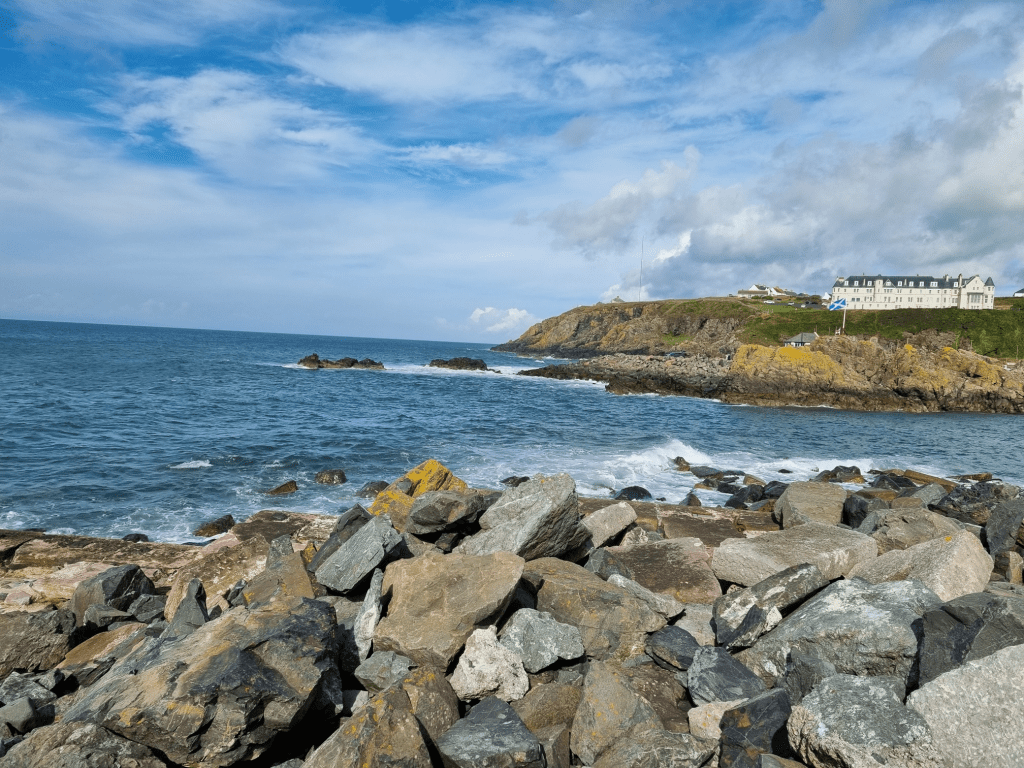
The calm, rocky waters of Portpatrick: a tranquil seaside haven, happily unspoilt by (and largely unknown to) tourists. Those who’ve been following my journey to date will know my visit to Tintagel in Cornwall last week affected me greatly; if we exclude London and Glasgow (everyone knows I adore these two cities), Portpatrick probably comes in second to Tintagel as the best place I’ve visited thus far. Even so, my beloved Loch Lomond is coming up later in the week…as is a weekend on Islay…with more new places in central and eastern Scotland later in the piece: so these rankings shouldn’t be regarded as conclusive. But they may be reordered depending on my mood!
More seriously, having made the decision to stay in Portpatrick (and again: I can’t recommend adding a night or two there to your itinerary strongly enough, should you decide to explore Scotland by road), the next step was a drive to Glasgow along the so-called “Scottish Great Ocean Road.” I honestly don’t know who it was who told me of this epithet; but setting off from Stanrauer (the town you hit when you reconnect with the A77 after emerging from the B-roads in and out of Portpatrick), the signs weren’t good.
At first, it looked like I would be driving adjacent to what looked for all the world like mud flats: yes, there’s water. No, it’s not attractive. And like any marsh or bog, it stank.
But gradually, this gave way to some stunning oceanic scenery (and — as fate would decree — some of the best scenery was land-side, with rollicking grasslands and rolling hills, that couldn’t be photographed while driving), and at least as far as Ayr, it was a very pretty drive. The passenger and freight ferry terminal (to Belfast, for those interested) halfway between Stanrauer and Ayr is an eyesore, though. Best to just keep driving.
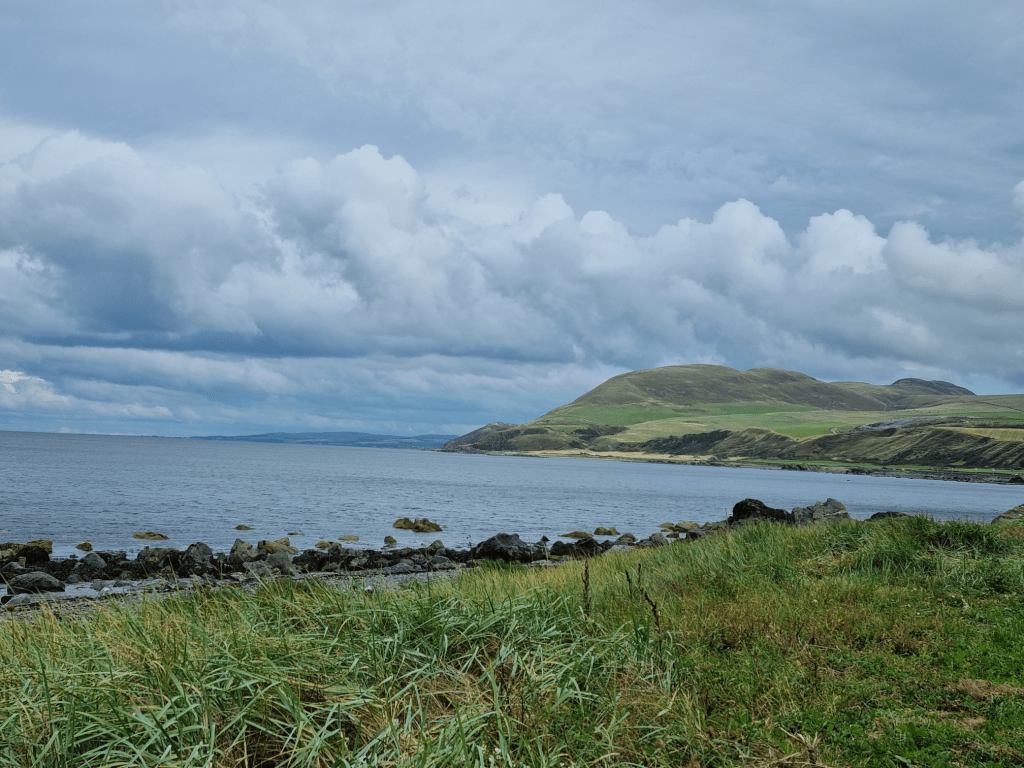
There’s no Twelve Apostles or London Bridge, but Scotland’s “Great Ocean Road” via Ayr boasts spectacular scenery. After Ayr, of course, the road becomes very functional: it’s 33 miles from Ayr to Glasgow, and the terrain quickly changes from A-road to freeway to the 70mph M77 motorway. I am very pleased to report that — with no more than a cursory look at Google maps before leaving Portpatrick this morning — I got off the M77 at the correct exit, drove into central Glasgow, wrestled briefly with its infernal one-way streets (I thought Brisbane and Sydney were bad for those, but for God’s sake!), and made it to my hotel with just one stop to ask for a pointer, just one block short. I got that close on the first attempt.
And so…I am in Glasgow: my spiritual home; my ancestral seat; origin of the Gow family (that’s my mother’s half of the gene pool); a multi-faced, diverse, vibrant piece of Scotland that some people admittedly just can’t stand. Yes, it’s rough, gritty and dirty, but I love it.
I’ve shared this clip from Billy Connolly elsewhere in the past; to me it strikes the perfect balance between reminiscence for the better days the old town has undoubtedly seen, the great affection for it among those of its natives and descendants, and the hint that maybe there really is cause for optimism about its future. I hope so. I love coming here. I love its old buildings and its bad weather, its people with attitude and its particular way of doing things. And it is perfectly accurate to concur with Connolly’s sentiment: Glasgow gave me more than it ever took away.
Speaking of bad weather, Glasgow waited just long enough this afternoon for me to get my hire car into the car park, then opened the heavens: it made for a soggy, sloshy trudge around town this afternoon, getting started on a couple of personal errands I’m ticking off over the next couple of days. They’re no particular secret in this instance, of course. But the rain wasn’t conducive to taking photographs, and in any case, I didn’t really go anywhere I wanted pictures from (although I did see something interesting on a very peripheral basis — I’ll show you that shortly).
My first stop was the chic retail store on Brunswick Street selling tweed for men, ladies and children; there’s a lovely tweed cap in my suitcase as we speak, and tomorrow I’m going back to buy a very smart tweed sports coat: something I have wanted for many years, but which is nigh on impossible to buy in Melbourne. I might buy a tweed suit tomorrow too, or at least get the product details and buy it once I’m back in Australia.
Tweed is finally fashionable again (not that it should ever have been otherwise: the misguided stereotype of tweed-clad stuffiness is a pile of bullshit consequent upon cutting off noses to spite the faces of those who propagate it). Anyone who wants to look good in something that’s comfortable, natural, sustainably produced, and very durable should be wearing tweed, and supporting Scottish sheep farmers in the process.
My other little job this afternoon (and remember — I was only able to “hit the town” at about 4pm) was to find a reputable tattoo parlour to enquire about what I have in mind:
The bird that never flew.
The tree that never grew.
The bell that never rang.
The fish that never swam.The first place I went to (on a recommendation) made no secret of the fact it couldn’t be bothered with me, what I wanted, or the work (and income) that might be associated with it; from there, I visited a second shop — in which someone in London I know got a tattoo some years ago as a lark on a weekend jaunt to Scotland — and got all of the information I wanted, as well as meeting three very nice people who wanted to talk…and talk…and talk…once the “business” of the meeting was done.
Will I get the tattoo? If I’m honest, I have all but decided to do it; the thing holding me back isn’t what people might think (I’ve never cared about that!), it isn’t the thought I’d regret it (I’d have to regret my ties to Glasgow to do that, which is…let’s call it “unlikely”), it isn’t the money, and it isn’t some phobia about the process being painful. It actually boils down to the fact I’m concerned about it getting infected — a concern heightened by the illness episode in London, and the rigmarole of the antibiotic treatment to get rid of it, the effects of which I’m still dealing with — and especially ten days before another long-haul flight back to Melbourne.
So it may be that I end up getting something…but back in Melbourne. Close to available doctors if I need them rather than an all-day wait at an NHS hospital blowing a full day of a holiday I’ve paid a fair chunk of change for. Either way, my readers will know 🙂
AND ANOTHER THING: I said I’d seen something interesting today…I have always known that Scotland is the ONLY country in the world, where Coca-Cola is sold, in which the pre-eminent local soft drink consistently outsells Coke…

Irn Bru…almost the same amount of shelf space as Coca-Cola and Pepsi combined. Take that, cola wars. I can take Irn Bru or leave it (although God knows I’ve drunk enough of the stuff over the decades), but there’s little doubt where the allegiances of Scots lie: this convenience store off Trongate near my hotel has as much space allocated to Irn Bru products as it does to Coke and Pepsi combined: in retail, shelf space is only forthcoming if it generates profits, so to my commercially-inclined mind, this picture speaks volumes.
-
Welcome Home To Scotland: Portpatrick
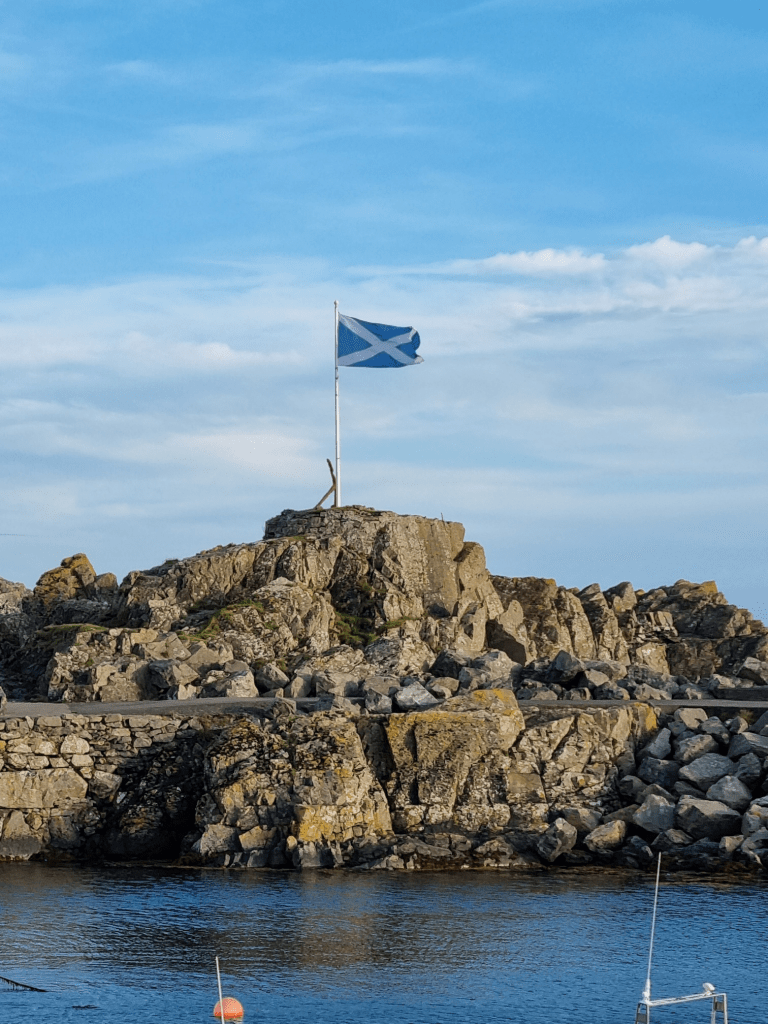
The Saltire: a symbol of good and right in the world, seen here at the entrance to the harbour in Portpatrick. I AM DELIGHTED to advise readers I am in Scotland; having driven up from Yorkshire during the day, my first stop is the underrated (and relatively unknown, in Australia) town of Portpatrick, on the south-west Scottish coast. This gorgeous seaside town is never going to attract fake, artificial people looking for a glamour strip, or for glitz and gratuitous luxury, and that’s precisely one of the reasons to recommend it.
It’s raining as I write (some hours after starting the post, sitting in the restaurant of the Mount Stewart Hotel, for I was distracted), and even though I’m back in my hotel room, I would still like to share the view out the window when I sat down with a fine Scottish ale to begin the job.

Portpatrick: what one would give to have this out the window every day. The hybrid jalopy is visible in the car park. Can I simply say…it’s GREAT TO BE BACK IN SCOTLAND!
I feel like I’m at home…and even though I was born in Australia, like so many people of other ethnicities born away from their ancestral root, this country feels every bit as much my own as Australia does. I “get” it, and its inhabitants “get” me in my experience, and my tinder-dry humour has never proven lost on a Scotsman: it’s not difficult to see where I got it from.
I have had an enormous dose of fresh Scottish salt air this afternoon, wandering for a couple of hours around the town: its high street, its foreshore, its beach and its rock formations, absorbing it as if by osmosis. I make no apology for sounding wanky, if that’s how I sound: I am just so…desperately and belatedly sated…by being on Scottish soil again.
In seriousness, what about Scotland is either readily known and/or promoted in Australia? Glasgow, Edinburgh, the islands, the Highlands, and golf at St Andrews. The Proclaimers and deep-fried Mars bars. Oh, and the bloody Loch Ness Monster: a complete (albeit charming) pile of shit of a story if ever there was one, to be sure.
The fact of the matter — unless you’re from Scotland (directly or by ancestry) or have another connection to it in some way — is that very little is known about this country in Australia and, it pains me to say, nobody has much interest in finding out. They crap on disgustedly about Haggis (which, if properly prepared, is a taste sensation that will blow a lamb roast out of the water any day). Other than that, Scots are regarded as some wild band of eccentrics emanating from somewhere north of Hadrian’s Wall.
The reason I raise this is that a seaside hamlet like Portpatrick — which deserves a place alongside any other boutique seaside destination anywhere in the world — is probably so foreign a concept to most Australians as to elicit a blank stare at its mention. I have always known it was here, but today is the first time I’ve been, and in truth I’m sorry I’m not staying longer.

Portpatrick, as seen from the seaward side of its lighthouse. I don’t as yet have any photographs looking out over the sea (save for the one out the hotel restaurant window I’ve already posted): by the time I got here this afternoon the sun was beginning to slide into the west, and this means that trying to photograph the water would record more glare than image. I will get some pictures of this in the morning and include them tomorrow night when I post in Glasgow, for this really is a gorgeous spot.
But in the meantime, check out this picnic table. Is this not the best place in the world to have a picnic? What a view…although given Autumn is extending its chilly fingers into the mornings in Britain now, it’s not long before such an enterprise would be a freezing, windy mess. But on its day…

Tell me where in the world offers a better view for a picnic lunch. You can’t: there’s no such place. I met a group of local fishermen on my walk this afternoon, and having seen some fish in the waves where the water got deeper — these would be ten to twelve inches in length — I asked them what they usually caught around here.
One salty-looking dude offered me a wriggling fry of about three inches in length that I thought he’d been trying to bait his hook with; apparently it was all they had caught in two hours, and he was throwing it back.
But my intel about the fish in the waves sparked a furious, profanity-laden debate. How big were they? I told them. What colour were they? Plain grey-silver, I said. The vigorous argument ensued from there. “They’re fucking sea bass,” one said confrontationally. “No, they’re mackerel, you shithead,” came the curt response. Apparently my information was very sound, for they immediately set about adjusting the tackle they had rigged their lines with. The eventual consensus, after heated debate and a lot more swearing, was that these were sea mackerel, and that there was a feast to be had if they could catch some. I smiled to myself as I walked away.
Portpatrick was the scene of Britain’s worst maritime disaster since World War Two; the MV Princess Victoria sank off the coast from here, in heavy weather, on 31 January 1953, with the loss of 135 of the 179 souls on board. The Court of Inquiry, held in Belfast, found multiple factors to blame for the disaster, but the HM Coastguard Rescue Team Portpatrick was instrumental in ensuring the carnage wasn’t even worse.

This tribute lies in a plaque mounted near the entrance to the harbour at Portpatrick. 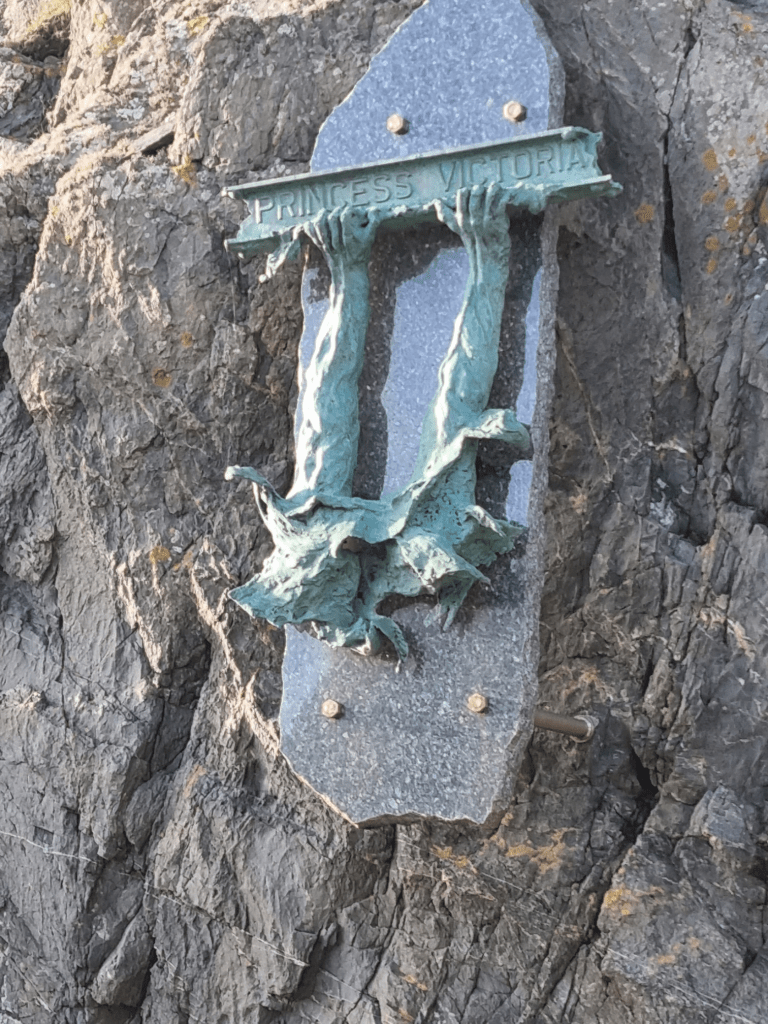
This says it all, really… Anyhow, that’s me for the night, at the risk of truncating this post; I have lost four hours to a job relating to my usual work — the “distraction” I mentioned — and at 2am I need to go to bed to ensure I get out of my hotel on time!
Tomorrow I am going to Glasgow.
There will be tweed.
There will be haggis.
There will be all types of fun.
Tattoo or not tattoo…that is the question… 🙂
-
We’re Halfway There: Yorkshire Today, Scotland Tomorrow

One of the many faces of the Yorkshire Dales, as seen from Grassington. It’s hard to believe half of this trip is over (or, indeed, more than half over if I’m being pedantic, and allowing for the fact Melbourne is nine hours ahead of Britain: in exactly two weeks I’ll be readying for my Monday trivia night in South Yarra). It’s been a great trip to date — a few things I’ve missed doing, a couple of intended catch-ups that didn’t happen, and the bout of illness in London (replete with unwanted subsequent side-effects from antibiotics) wasn’t welcome; but overall it’s been precisely the tonic I needed, and have needed, for more than a little while. I actually feel relaxed, and I can’t remember the last time I could honestly say that.
It was put to me by a mate of mine that this trip sounded “full on;” perhaps it is, but I didn’t book the type of holiday on which one generally lounges by the pool with a pina colada in hand. No, as much as I needed a break, this was about doing things, too: I love long drives (tick), I’ve been exploring places outside London I (mostly) haven’t been before (tick), I’ve caught up with some people I wanted to see and will catch up with a couple more toward the end of the trip (tick), I’m accruing “goodie bags” for my kids (tick), I’ve bought some nice new clothes, and will acquire some more from the tweed merchants in Glasgow (tick)…and I may or may not yet get the tattoo in Glasgow I have been flirting with:
The bird that never flew.
The tree that never grew.
The bell that never rang.
The fish that never swam.I also bought a very nice top hat from Christys of London before I came over here — a proper, fur-trimmed formal British dress hat — and had it delivered to me in Melbourne: while it’s nominally an acquisition from this trip, I couldn’t be bothered trying to get it home safely in the overhead locker of a B777 (or arguing the toss with flight attendants for having a second cabin item either, for that matter), so add that to the score too.
So is the trip “full on?” It’s a matter of perspective, I suppose, although there has also been plenty of down time for walking, thinking, sleeping, and plotting and scheming a few things for my return to Australia: strategic plans to cover the next few years — not the first few weeks I’m back.
What I haven’t done is any work on my novel; perhaps, in keeping this travelogue, my writing time could be seen to have been otherwise utilised. But once again, the information I have uncovered on this trip is percolating away in my mind, arranging itself into the correct order for me to simply sit down and type it out when I’m ready, so I can’t say I’ve made zero progress on that front either: and in any case, there will be plenty of scope for me to do so once I’m home.
Today has been both satisfying and frustrating: I did what most travellers do and found a laundromat, and laundered my dirty clothes; fortunately today was the only time I’ll have to do it. I bought two weeks’ worth of clothes with me this time to minimise the disruption.
But in a twist, this wasn’t the stereotypical dingy shop in a high street where you sit around for two hours waiting for the wash and dry cycles to run their course; this was something I’ve not seen before — a Revolution Launderette — in the car park of the Morrisons supermarket in Skipton, about nine miles from Grassington. I regret not taking a picture of it, but the one I’ve nicked from Motorway Services Online is a faithful replica.

It was “a revolution” all right: £10 to wash, £9 to dry, and away you go. (Image: Motorway Services Online). That irritating task completed, I took the 42-mile drive from Skipton to Thirsk, to the World Of James Herriot museum…and found, infuriatingly enough, that not only was it closed but a local told me it hadn’t been open “for most of the day” (despite being advertised as open from 9.30am until 5pm). An 84-mile (135km) round trip isn’t just a colossal waste of time, but when paying 172p per litre for fuel, it’s an expensive lot of nothing, too. And I’m going to have to find the stuff my daughter wanted from All Creatures Great and Small somewhere else, for she doesn’t deserve to be let down by someone skiving off and taking an early afternoon off.
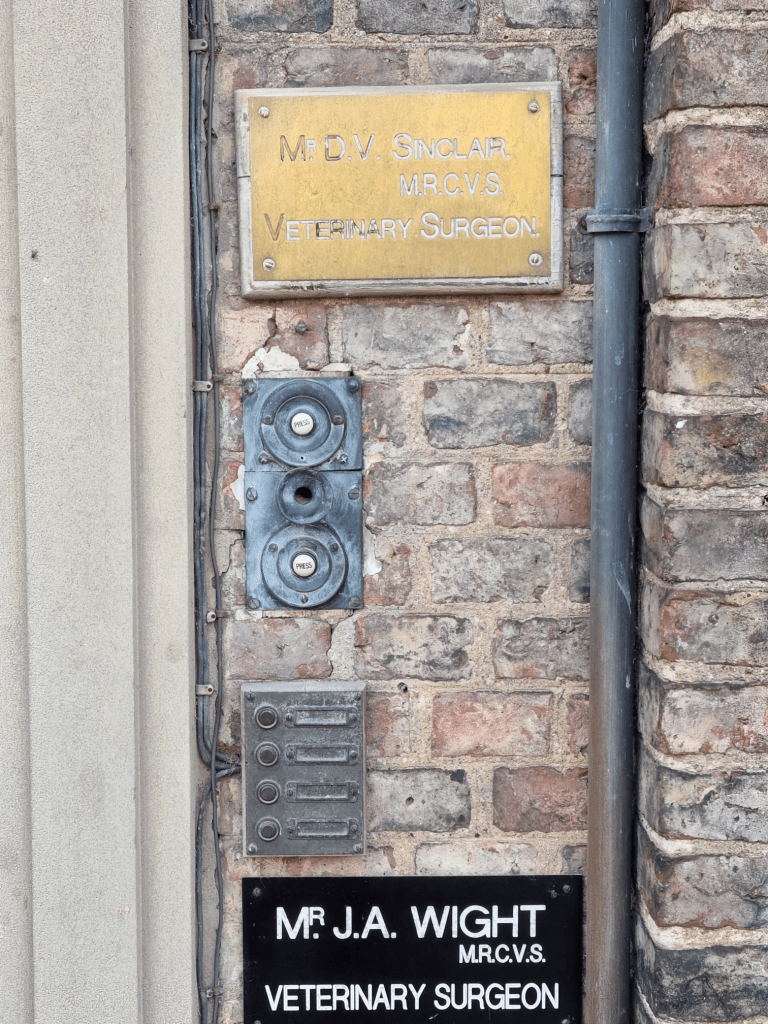
The “World Of James Herriot,” where Alf Wight and Donald Sinclair worked…but alas, nobody was home. So today is my last day in England — at least until Thursday week, when I fly back into Heathrow for my two nights in an airport hotel before the big jump back to Melbourne.
Tomorrow, I’m driving back to the M6 Motorway, and heading north to Scotland; rather than simply zoom directly to Glasgow, I’m taking a route that hugs the south-west Scottish coast to Ayr, then cutting across to the old town. Apparently some people refer to this route, from the border to Ayr, as the “Scottish Great Ocean Road” — we’ll see. I’m staying in a delightful little seaside village called Portpatrick, and look forward to sharing some pics once I land for the night and get settled.
So tomorrow — in a sense — this Scot is going home. It’s a huge proportion of the rationale for taking the trip in the first place. Ten nights in Scotland out of a total of 26 in Britain underlines the importance to me of this portion of my visit to the UK, and there are some wonderful places — and in all likelihood, stories — lying in wait over the course of that time.
-
Heading North: Winter Is Coming
I’m in North Yorkshire, in the charming village of Grassington; I’ve been here before, and anyone who has seen the Channel Five (UK) remake of All Creatures Great and Small currently screening in Britain (and elsewhere) will recognise Grassington as Darrowby, the fictionalised town in which James Herriot — who was, of course, Scottish veterinarian Alf Wight — practised his craft.
I love the James Herriot books, wanting desperately as I did to be a vet until my maths and science results at school showed I didn’t have the aptitude for it. But the original 1978-90 series of All Creatures is the only dramatisation of them worth watching, in my view, and it satisfies me somewhat that my 13-year-old daughter, who is flirting with veterinary science and zoological science as career options (despite, like her father, being an indisputable English/Communications type), has attempted to sequester my DVD copies of it as her own.

Holly Lodge, Windermere: replete with holly tree by the gate. The further north I travel, the more holly I’m seeing. As I mentioned last night, it was too dark when I arrived in Windermere to do any photography: the place I stayed at, above, is somewhere I’d certainly recommend: but again, the heat in this old stone brick building was stifling, there was no air conditioning (heritage laws again, perhaps), and to compound this, the western sun shone directly into my room, which needed to have its blinds drawn to ensure neighbouring properties didn’t have visibility into it, thwarting the open window and the cool air it may have offered.
And it was cool: the British summer is almost over, but the room was like a furnace.
I know Britain gets cold (oh yes, I know this all too well) but in summer, there’s a need for cool air, or at least air conditioning: the heat and humidity can be on par with Brisbane weather, which astonishes people — until they actually come here and experience it for themselves, that is.
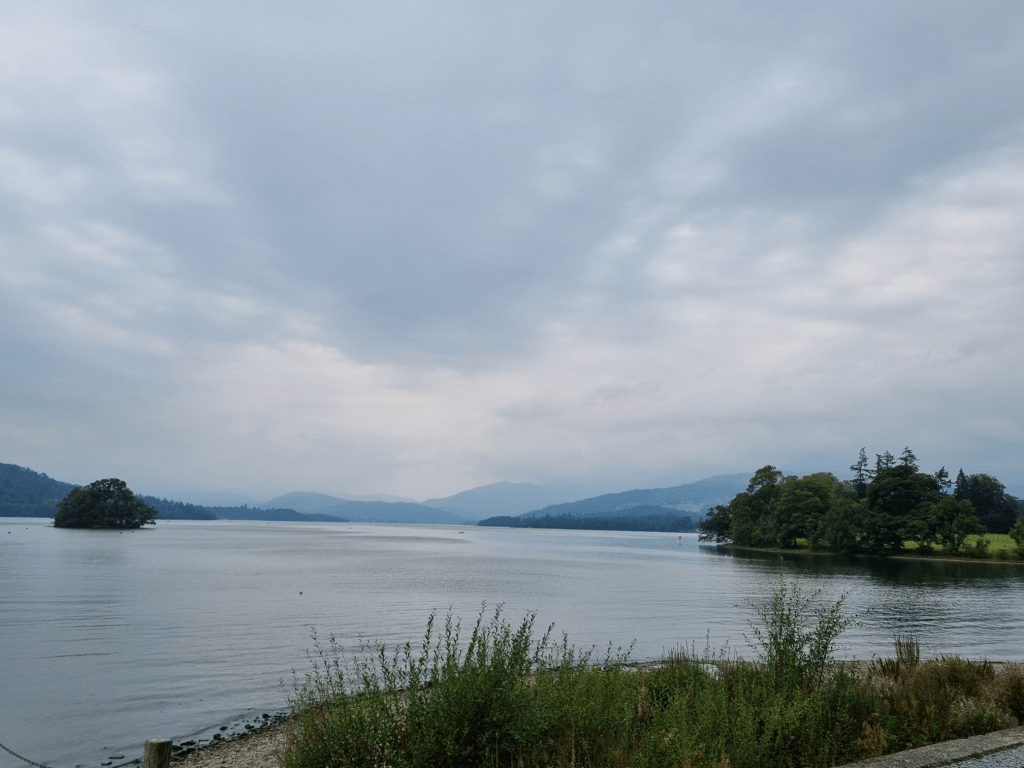
Lake Windermere, Lakes District, Cumbria. I have good news and bad news on my touted enterprise to see a lake in the Lakes District: the good news is that Lake Windermere was, in fact, very close to where I was staying; half an hour after I checked out of the Holly Lodge I was ambling around its shores. Serene? Tranquil? It was spectacular. And quiet. I can understand why William Wordsworth, his contemporaries, and countless millions of others before and since, have sought this region of Britain out as a sanctuary, or at least a spot to escape the hubbub of daily life for a little while and to simply breathe.
Lake Windermere is the largest lake in Britain; even with the township of Bowness nearby, spending time there was like stepping into a wilderness unsullied and untouched, despite the pleasure craft sailing on it and the cafes and retail vultures, hungry for tourist dollars, astride its shores.
The bad news is that as far as I could see (and I walked around the lake as extensively as I could) there were no daffodils: more’s the pity. It’s one of what I would have thought the iconic pictures from this trip, to be caught wandering amid a company of daffodils, as Wordsworth put it. Alas, it wasn’t to be. But given the option of making it to the Lakes District at all, as I explained in my last post, was the result of a somewhat fortuitous set of circumstances, I’m happy. A coffee at the Windermere Jetty, before heading off on a lengthy walk to explore, was also good for keeping the spirits up. Coffee always is. But no daffs.

Bowness on Windermere, another of the plethora of stunning rural British towns. Note the Peter Rabbit shop. And I should point out that this is the area to which London-born Beatrix Potter relocated after a visit to the Lakes District; the town of Bowness on Windermere is rich with Potter-related retail offerings, including a Wind In The Willows “experience” tour (which, in a sign of the times, was closed today due to COVID-related staff shortages).
Once I was done with Lake Windermere and Bowness, I set off for Grassington; it’s not a huge distance — only about 80 miles — but the nature of the rural roads in these parts dictated that it should take close to two hours. Naturally, when driving in these parts, the scenery is absolutely stunning, and what was to be seen on the A65 between Windermere and Grassington doesn’t even measure up to my likening of “driving through a picture book” when it comes to the Yorkshire Dales; I wasn’t even in the Dales at that point. But it’s stunning no less (and the smell of cow shit is quite pervasive, I can tell you, as the bovines roam freely, including leaving evidence of their presence on the road).
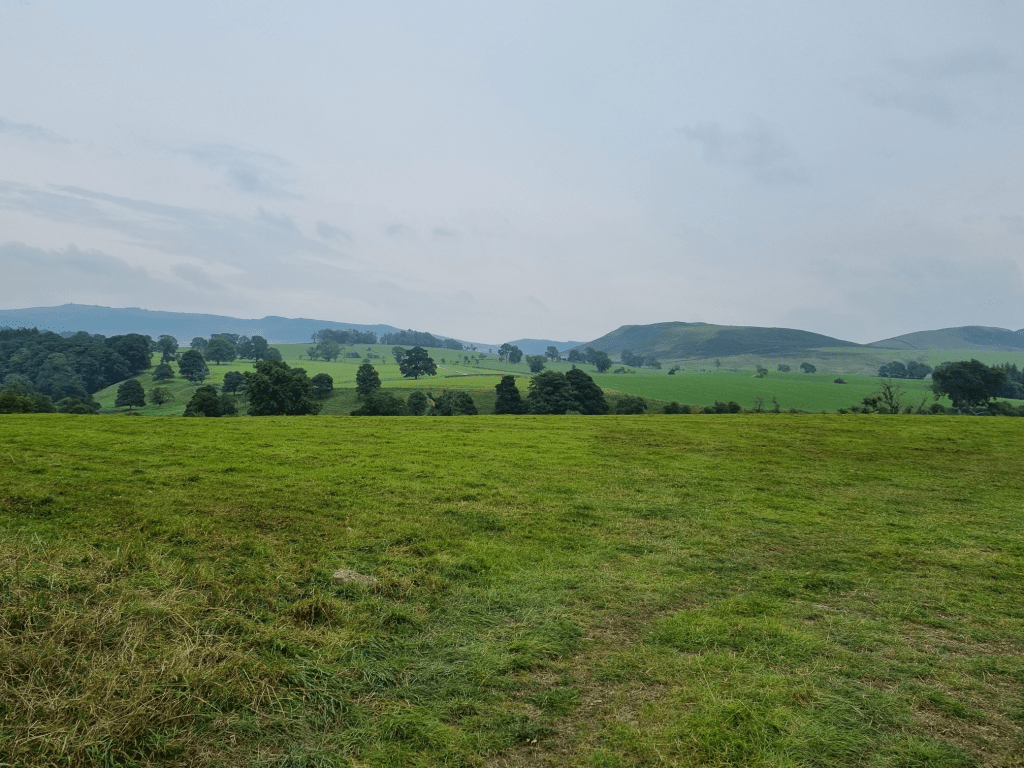
A roadside shot of the North Yorkshire countryside. It’s as easy as that to see beautiful English countryside panoramas. And so — as I said at the outset — I’m in Grassington, and staying at the Grassington Lodge; it’s the only property from the 2008 trip that I’m staying in again, and whilst I would continue to recommend it to anyone who is of a mind to travel to this area, it’s nowhere near as good as it was then (although it’s still superior to some of the other places I have stayed in thus far, to be sure).
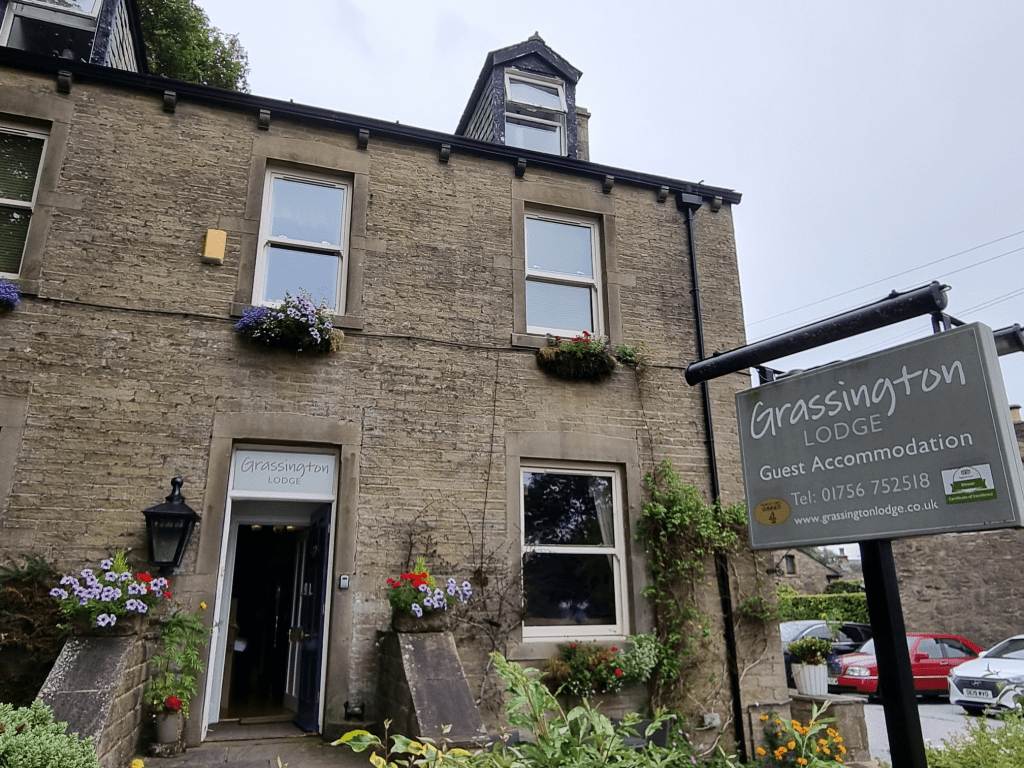
Grassington Lodge. Well worth considering, but it’s five-star pricing for a property that now struggles to merit four. The property had an onsite manager when my ex-wife and I stayed here in 2008; fast forward 14 years, and the manager has been replaced by a management company based in Ipswich, in Suffolk, over 230 miles away. The decline in quality is stark; what was a veritable sparkling jewel of the Pennines is now merely just above average. From the outside, most of the buildings in Grassington (and, indeed, in many other rural British towns) look very similar; this one was like a palace inside, once upon a time. It’s the reason I rebooked it — premium pricing notwithstanding — and while it’s probably worth about £110 per night, it’s not worth what it actually cost now I’ve seen it (which was somewhat — but not hideously — more than that).
An Ottoman that is badly stained; carpets that haven’t been steam cleaned in quite some time; scuffed, chipped, dirty cabinetry; scuffed, chipped walls and doors (in fact, the place should be repainted throughout); carpet in different sections of the common areas that don’t match, suggesting parts of it have been replaced with no care to see they match…I could go on, but a slovenly approach to “management” has turned the exceptional and outstanding into the merely ordinary and — as I have said a few times in this travelogue — it’s a shame.
Still, in breaks in writing this piece, I’ve been standing on the front landing of the Grassington Lodge — almost 14 years to the day since I last did so — vaping, rather than smoking as I did back then; it’s raining steadily (as it also was the last time I was here), and the raindrops keep falling on one’s head despite the very best efforts to find shelter from them, as these old English houses are typically exposed directly to the weather. Even considering the disappointing decline in the management of the property, it still has its charms — and for that reason, I recommend it: with the rider that if it continues its journey toward cost-cutting nirvana (which I’m sure is a factor) that charm might, soon, be outweighed by an inclination toward staying somewhere that’s actually fit to stay.
Tomorrow, I’m taking an embarrassingly large bundle of dirty laundry to Skipton — a bigger town about 12 miles from here — to replenish my inventories: I bought two weeks’ supply of clean clothes with me from Melbourne, and aside from some dress items I had dry cleaned in London, it’s exhausted as of tomorrow. I don’t do “dirty,” so a couple of hours watching the spin cycle in an iffy laundromat is in order.
And from there, I’m going to Askrigg (where the “proper” All Creatures was filmed) and thence to Thirsk (the actual town Wight and his colleagues lived and worked in). I have been to both before. But I want my own pictures from them; and my daughter, who has come to love the Herriot works, deserves something of her own from the museum in Thirsk, which doubles as a James Herriot retail outlet.
More pictures from me tomorrow (but — I promise — not from the laundromat. Ha!)
AND ANOTHER THING: This (see below) greeted me on my way around Bowness on Windermere this afternoon; cuisine barely preferable to hunger, to be sure…that poster reading “Discover the Hot Fresh Domino’s App” is actually a digital billboard which, as I tried to get the picture, offered “Any Pizza For £12.95” (or in Australian dollars, $21.95 at today’s rates). For $21.95, one can buy four (4) Domino’s pizzas in Australia using a supermarket receipt voucher — not that you’d want to — and even then, they’re a rip-off. Why anyone would pay £12.95 for ONE (and think it’s a bargain, let alone worth eating at all) is beyond me…
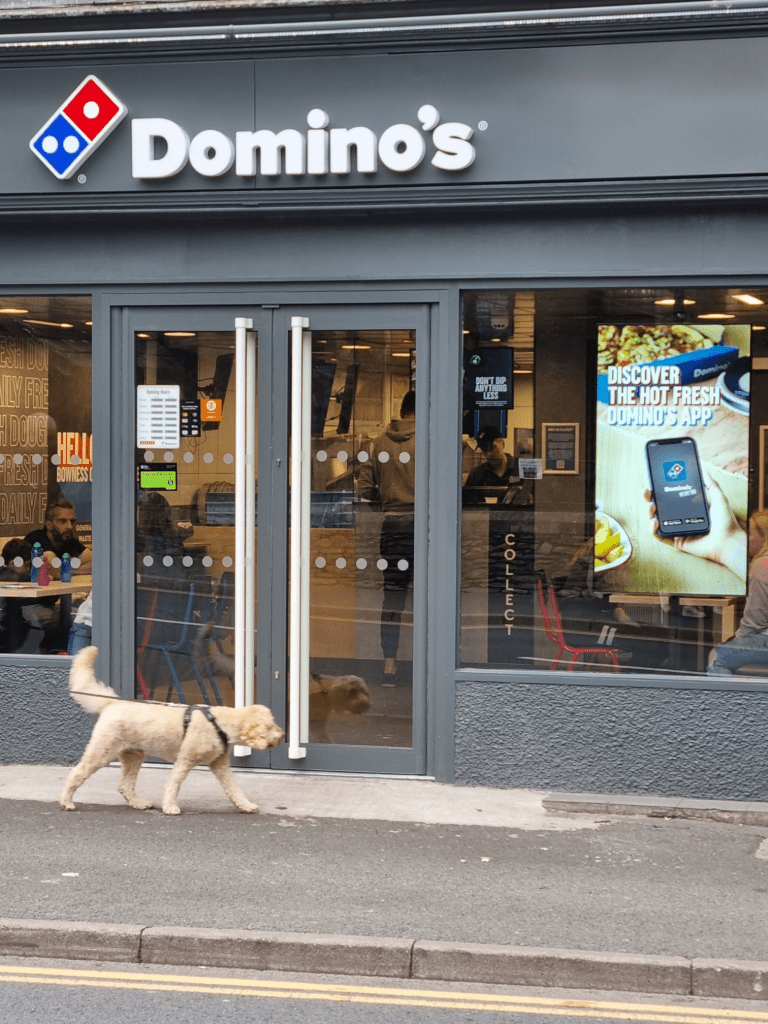
Like the so-called “Golden Arches,” there’s no escaping some things, regrettably. -
Woodstock, Windermere, Winston and the Windy Pig

Winston Churchill’s final resting place in the Spencer-Churchill burial area at St Martin’s Church, Bladon. I should begin with an apology for last night’s rather half-arsed addition to this online travel journal; I was exhausted, and while in truth I’m no better this evening — it’s been a 240 mile drive today in and around a couple of other things — and so come midnight I will either be asleep or preparing to be so (and this is from someone whose idea of “lights out” is generally 2am).
That photograph you see at the top of the post is how the grave of one of the greatest Englishmen in history, Sir Winston Churchill, appeared when I photographed it this morning; more on that shortly, for before I made the short trek (and it is a trek) from Woodstock to Bladon, I took a couple of photographs of the historic town of Woodstock (in which Blenheim is based) that I would like to share.

Oxford Road, Woodstock: this is the through route, leading to Blenheim Castle and Bladon to the south. Like many of the thousands of picturesque villages dotted across the United Kingdom (and particularly in a place like Oxfordshire, which is one of the prettier boroughs in England), Woodstock was charming: friendly and welcoming people, great places to go and see, and a gorgeous spot of countryside…
…but the accommodations left quite a bit to be desired on the part of an establishment peddling pristine images of a perfectly maintained property on its website, whilst having the unmitigated gall to charge £110 per night for the reality of broken drains, cracked bathroom tiles, ancient stained carpets, the miserly stipend of half a roll of toilet paper, and a near-total lack of ventilation betraying the lie.

Market Street, Woodstock: the main market street (like the sign says, of course). The offending hotel IS visible here… I am flirting with posting a “hits and misses” scorecard when I get back to Melbourne to share some travel tips…this place will certainly be omitted from my recommendations (although, ridiculously enough, it served up the best omelette I have EVER had for breakfast this morning. Go figure).
As I tried to explain in my last post, there are plenty of knockers who, when told of a trip like this one, scoff and say, “how boring!” One can only opine that the loss is theirs; these historic old towns are interesting — they don’t have to be famous for much, although some of the ones I’m visiting obviously are — and it’s hard to understate the value of getting out into the countryside, with lots of sweet fresh air (and often fresh salt air, as I’m taking in a lot of coast), doing plenty of long walks and even longer drives. It isn’t like there aren’t people about — I’ve spent just as much time talking and laughing, with old friends and new friends, as I have on my own.
But I digress.
My last act of business in Oxfordshire — having inspected Blenheim Palace yesterday — was to do what I have made a personal tradition whenever I am in Britain: that is, to visit the grave of Sir Winston Churchill, and to pay my respects.
As I said last night, the free world owes Winston a debt; the debt is a continuing one, but a glance at the state of the world today makes one wonder whether his legacy of freedom and liberty is being squandered, but that’s a discussion for another time, and in another place, to be sure.
As I discovered the first time I decided to visit Winston’s grave in 2008, it’s not easy to find despite being in what doesn’t even pass for a one-street town — Bladon, a mile and a half from Woodstock — and it’s not even a case of “blink and you’ll miss it:” it’s tucked away up a side street, and if you don’t know what you’re looking for, you simply won’t find it.
Churchill is buried — in a familial burial yard with many of his ancestors, other relatives, his wife and his children — at St Martin’s Parish Church in Bladon; to approach from the “road” — once you’ve found it — is suggestive of very little. The building itself, while dating only from the 1890s in its current form, looks tired, and an old graveyard as one enters the churchyard screams of dilapidation.
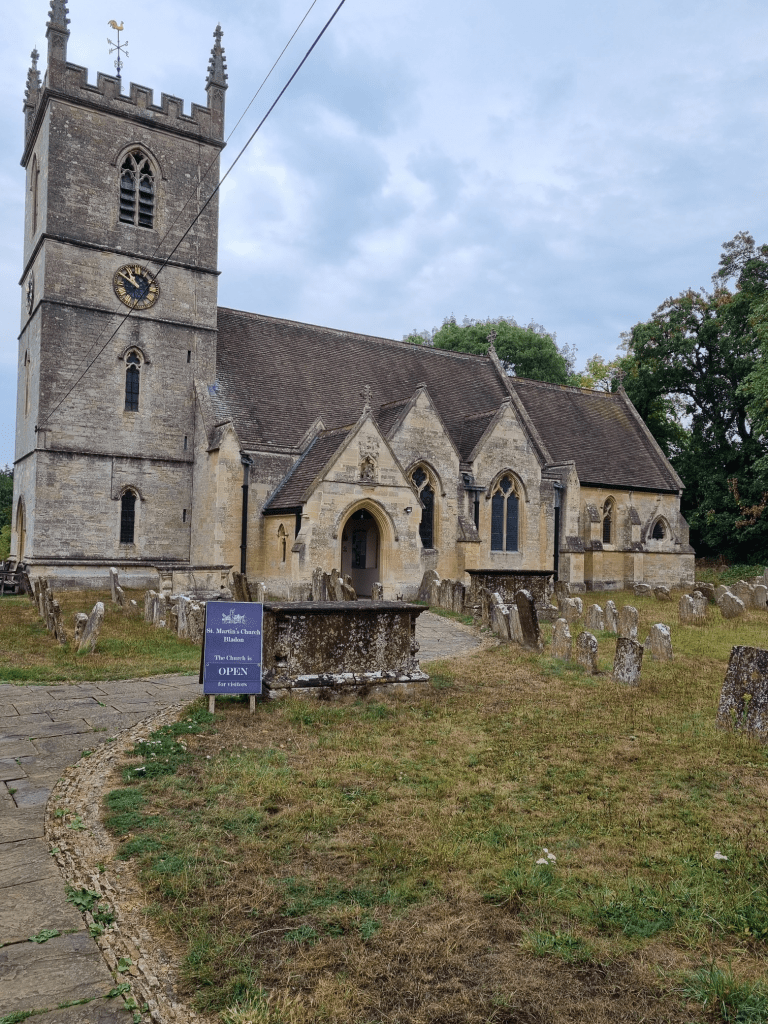
St Martin’s Parish Church, Bladon, Oxfordshire. It is believed a church has occupied the site for at least 1,000 years, with partial records dating to the eleventh century predating a mediaeval church that was demolished in 1802, with Churchill’s ancestor George Spencer, 4th Duke of Marlborough, funding the construction of a new church in 1804. This was partly rebuilt in 1891, and remains the current incarnation of the church today.
Behind that church, however, is a second graveyard: no bigger than the rundown cemetery at the front, but immaculately presented, well maintained, and as pretty as a picture. It should come as no surprise that most of the people buried in it are from the Spencer-Churchill clan; the construction of Blenheim Palace and the Marlborough dukedom ensconced the Spencer-Churchills as the pre-eminent aristocratic family in the area, and unlike some of their contemporaries there is plenty to suggest they were benevolent and very generous in their approach to commoners (which should also come as no surprise).
I won’t share the conversation I had with Winston.
But it was a still, heavy morning in Oxfordshire this morning — as it was the first time I went to St Martin’s — and as I entered the Churchill family burial area, a swift and robust gust of wind passed through the graveyard: then subsided completely. The same thing happened in 2008. It was very difficult not to surmise someone was aware of one’s presence. And I have to say, these visits to Sir Winston are surprisingly emotional events.

I wouldn’t miss visiting Winston when in Britain for anything – but these are surprisingly emotional, taxing affairs. Once the “formalities” were out of the way, it was into the church to see what had been left out for visitors to buy; when I went to St Martin’s in 2008, I bought two stunning photographic prints — one of Winston in his office, the other of the grave prior to a subsequent restoration — for £10 each, and to the horror of my ex-wife had them professionally framed when we returned to Melbourne (which cost $300: many times more than the value of the photographs). This time I bought some replicas of old war-era postcards bearing slogans (such as “Winnie Will Get Us Through!”) and a CD of British ceremonial music: something that’s suprisingly hard to get really, considering the British have some of the best pomp and ceremony music of any country.

Inside St Martin’s: the worn exterior belies a beautiful interior space and magnificent stained glass windows. Anything sold goes toward funding the maintenance and upkeep of the building, so I don’t mind spending a tenner or two there when I visit: I will likely leave a small bequest to the St Martin’s Church Trust “when the time comes” — albeit not for several decades yet, if I have anything to do with it — so a little bit now doesn’t hurt.
It was nice to have a few moments of solitude in there too…to reflect, collect my thoughts, and move on with the day.
And speaking of solitude, I had another six-hour dose of it after leaving Bladon late this morning; what should have taken a lot less time — driving from Oxfordshire to the Lakes District — was prolonged by roadworks on the M6 Motorway that created 50 miles of thickly congested traffic that at times barely crawled, dragging the average speed down by about 20mph.
Tonight, I’m staying in Windermere, in Cumbria: a classic Lakes District town, and one very close to William Wordsworth’s infamous daffodils, which I will attempt to get a look at tomorrow before I head up to North Yorkshire — James Herriot country — for the weekend.
If I’m honest, the night in Windemere is a bit of a bonus, and a partly unplanned one; I’ve never been to the Lakes District before this, and it looked impossible to incorporate a stay on this particular trip as I was planning it out. Even so, there was no need to stay longer in Oxfordshire; I couldn’t stay longer in Cornwall before that than I did; and while I have two nights in a gorgeous bed and breakfast in Yorkshire (it’s the ONLY property I’m staying in that was on the itinerary in 2008), it couldn’t be stretched to three nights.
So a night near lakes and daffodils it is: a quick visit, but perhaps better than no visit, and as the Yorkshire town I’m staying in isn’t actually that far away, I can spend most of tomorrow having a good look around before I go.
Hopefully when I post again tomorrow, I may have some lovely daffodils to show, and some snapshots of one of the lakes. It was getting dark by the time I finally made it here this afternoon, so photos — even of the lovely bed and breakfast I’m in for the night — had to wait.
Oh, and the “windy pig?”
I did get to have an excellent dinner at The Pig (apparently known locally as “the windy pig,” for reasons best known to the Cumbrians). A sweet pea and smoked ham soup followed by an awesome piece of pork belly, perfectly crackled and served with creamed potatoes, broccolini, apple sauce and red wine jus, and — of course — a lemon tart. Absolutely splendid!
AND ANOTHER THING: What idiot (and I use this phraseology advisedly) goes to motorway services to gamble? I’m a big fan of Britain’s motorway services system, which offers road travellers a safe stop with passable food options, patrolled toilets, well lit spaces, frequent opportunities to refuel cars and other conveniences, but this?
Each to his own of course, but I think this is just too much.

Stop to fuel your car, eat a Whopper and have a crap, and put your fortnight’s salary down a slot machine. Yeah, right. -
From Barnstaple to Blenheim Palace – and a Meeting With Winston
It’s been a long day today, and if I’m honest, I’m tired; a 180-mile drive isn’t the worst impost in the world, but still suffering the consequential effects of the antibiotics I’m finishing tomorrow, the driving during the past couple of days has been…trying, is a good word I think.
Not that that is getting in the way of what I came back to Britain for.
And so this post will be somewhat briefer than last night’s, as another day of driving — this time to Cumbria and the Lakes District, 220 miles north — beckons, and as I didn’t make it to Bladon this afternoon to visit Sir Winston’s grave and pay my respects, that will happen in the morning before I set forth.
One of the things that added a layer of tedium to my movements today was a rainstorm — which blew up out of nowhere — that added a torrential downpour to the last 60 miles of my drive to Oxfordshire from Devon; it’s not the sort of thing one likes to see toward the end of a lengthy drive, and I’ve always found heavy rain easier to deal with on an open freeway: by the time the tempest arrived, I’d moved off the M4 Motorway and onto the lesser A-roads leading to Oxford instead.
But the other thing that has delayed my visit to St Martin’s Parish Church in Bladon was the sight, driving into Woodstock this afternoon, of Blenheim Palace — the familial seat of the Marlborough/Spencer-Churchill clan, and the birthplace of Sir Winston — and given my inability to get to Westerham to visit Chartwell at the start of the week, I decided to pay Blenheim a visit.
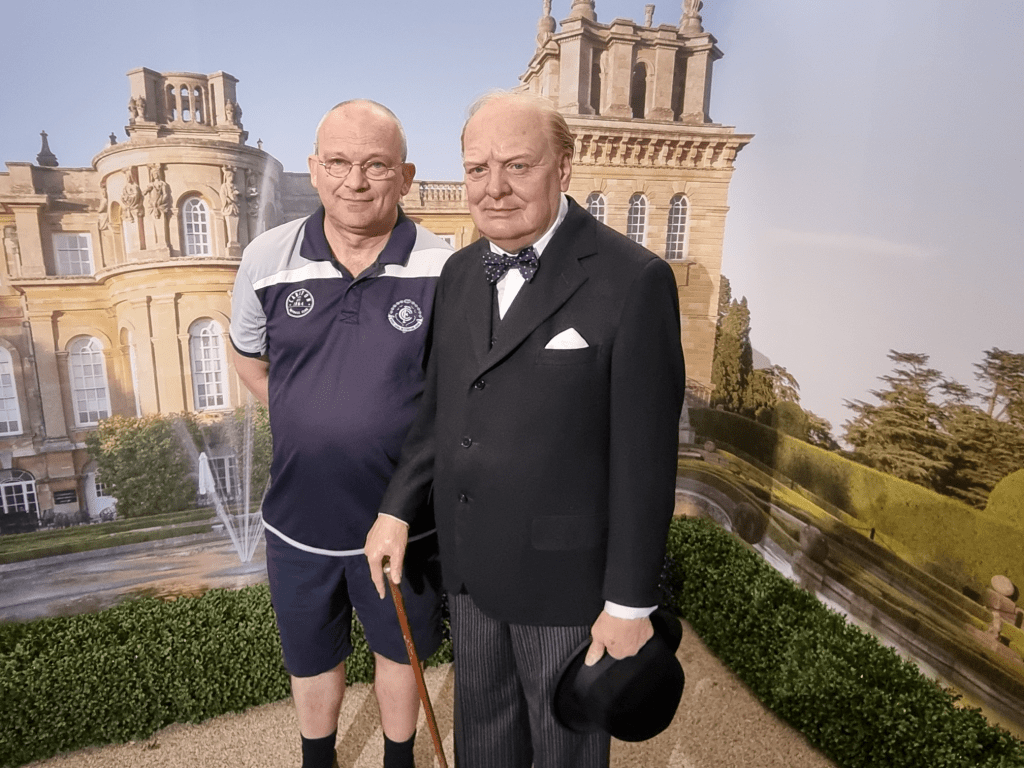
Call this tacky tourist behaviour by all means: but had I known I’d see Winston, I’d have dressed more appropriately. Some people think wandering around old buildings — regardless of their historical or cultural significance, or their centrality to interests others may have (in my case, the life and work of Winston Churchill) — is boring, a waste of time, or (with the entry fees that get charged) a waste of money.
I couldn’t disagree more: and while I might grumble about the price (at £32 for Blenheim Palace, more than half as much again as Chartwell would have cost) I think it’s important to know about history, and to learn about the individuals and events that have shaped it.

Not cheap. But probably worth it. Once, at any rate. England, Europe and the entire free world owe a debt of gratitude to the Churchills: to Sir Winston, certainly, for the role he played in leading the defeat of Nazi Germany and the Third Reich; but also to John Churchill, the first Earl of Marlborough, whose decisive military victories in the 17th and 18th centuries were crucial to preserving Britain’s freedom at a time of shifting geopolitical realities and in an era of wars of conquest.
And to many other historical figures this aristocratic English family has produced over the past 200 years.
Blenheim — the land and funds to build it having been granted to John Churchill by Queen Anne in appreciation of his services to the country on the battlefield — itself has a rich history, with generations of Spencer-Churchills serving in the armed forces, at Westminster, and in Winston’s case as a war correspondent, army officer, member of Parliament for 64 years (save for a short stint without a seat in the 1920s) and, most famously, as Britain’s wartime Prime Minister from 1940 to 1945.
Many lived or were born here; some — like Winston himself — were controversial figures of their times, to say the least.
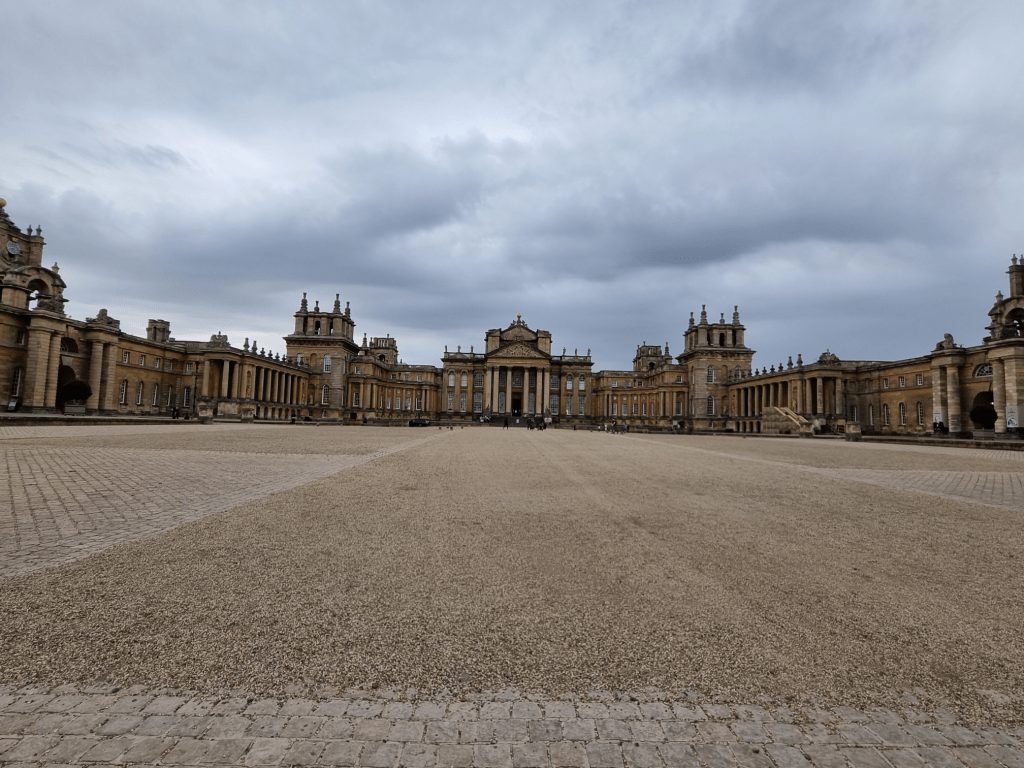
Blenheim Palace, Woodstock, Oxfordshire. Most notoriously, Winston’s father — Lord Randolph Churchill — lurched from scandal to scandal in the late 1800s, culminating in the implosion of his career in attempting to bring the government of Lord Salisbury down while serving as Chancellor of the Exchequer. Salisbury’s government briefly reeled, but recovered; the episode destroyed Randolph, and the younger Churchill (who was no stranger to controversy in his own right, especially early in his political career) was obsessed with rehabilitating his father’s image and reputation, which probably fuelled the distaste Winston engendered for himself among some of his contemporaries: particularly those with long memories.
In any case, I had a pleasant hour or so wandering the old palace, before retiring to the gift shop to buy some things to take back to Australia for my kids. As you do.

The Third State Room, Blenheim Palace. I’m aware I haven’t done Blenheim the justice in this post it deserves, and for this I apologise; as I said, I’m tired. But before I head off again in the morning, I wanted to share with those following my journey where I’ve been, and give some insight into this magnificent residence, with its deep links to politics, society and government — both in Britain and, by virtue of its reach, across the world.
I will be back again tomorrow with more to share.
Right now I am going to sleep. It’s past midnight 🙂
-
From The Sublime, to the Exquisite, to Judging a Book by its Contents Page
With the very keenest of regret, I’ve left Tintagel and Cornwall behind, as my sweep around and across the United Kingdom gathers pace; the first stop on this onward movement was a spontaneous and partly unexpected treat (and a tip for next time, if I’m honest). But all travel experiences have highs and lows, and it pains me to report that my overnight stop in North Devon is not somewhere I would recommend.

Time to say goodbye: one long, last look over the Cornish coast from Tintagel. The last for now, of course. I shot a short video, from my vantage point in front of the Camelot Castle Hotel this morning, but I couldn’t add it to this post (and if anyone knows how to do that, tell me. Please!) I did however also take the photograph above, and with those two pieces of media safely in hand, I hopped into my hire car, and left.
Cornwall has long been a favourite place of mine, but this visit has affected me very deeply, to the point — I’m not ashamed to admit it — I was quite emotional and upset to leave Tintagel today. But I will return: and, God willing, it won’t take another 14 years to get my feet back on British soil, as it did this time.
I’m staying in the North Devon town of Barnstaple this evening (and more on that soon) but the drive across from Tintagel wasn’t long, and I was here soon after noon. Another little job relating to my writing projects — this time to verify some research I did remotely late last year in readiness to start writing my first novel — was in order, and so before I checked into my hotel, I headed to Combe Martin and “the hangmen:” Great Hangman and Little Hangman, the latter being the object of my interest.

Little Hangman in Exmoor, North Devon. There was bad news at first: my assumptions about their accessibility were wrong, and I would need to rewrite a small portion of my draft; there was however a solution in terms of access, which I could incorporate into my story fairly easily, and so aside from the fact I couldn’t personally stand atop Little Hangman today (to do so would require a three-hour return walk up a steep slope) this bad news turned out not to be an issue.
The good news was that as a result of this discovery, other substantial threads of my plot actually become a lot stronger due to the change I have to make: it vindicates the decision to go and see for myself, for of course without credibility and integrity, my storylines would be worthless.
And I was fortunate to learn all of this through an accidental discovery: after roaring through narrow country lanes around Ilfracombe and Combe Martin at 40 and 50 miles per hour — desperately hoping not to meet a car coming the other way — I stumbled on what must count as one of Devon’s hidden gems: The Hunter’s Inn, at the edge of the moor on which the hangmen announce its border with the coast.
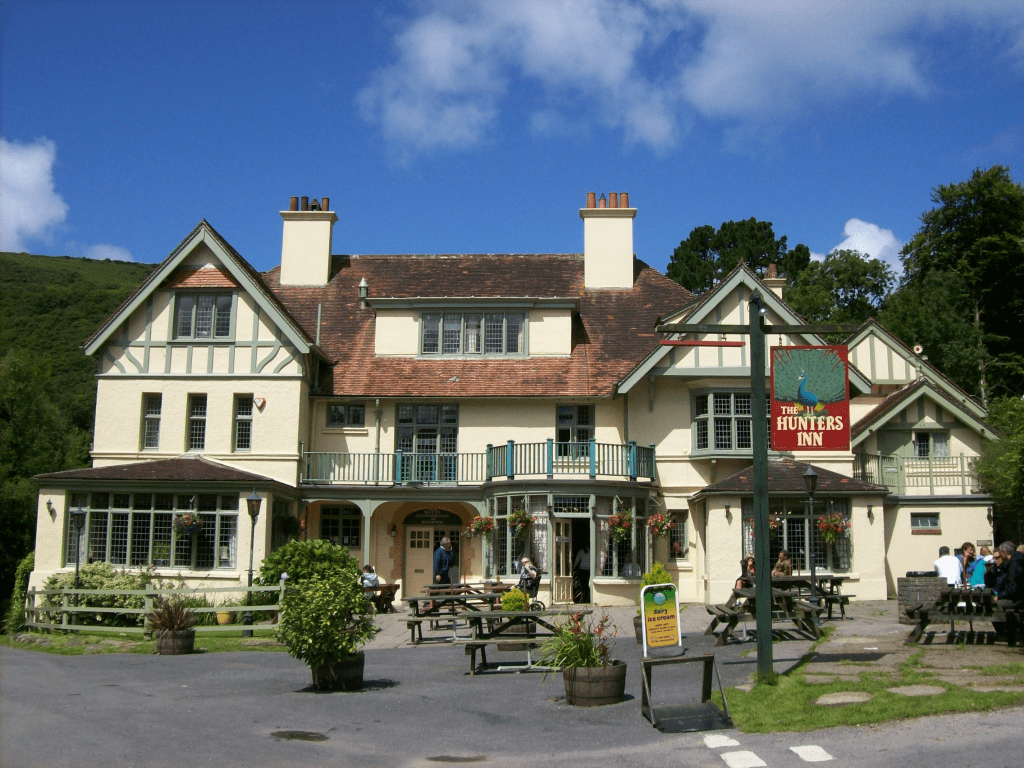
The Hunter’s Inn, Exmoor, North Devon. (Image: Wikipedia Commons) Happily enough, one of the full time managers on duty — a Devon local — had spent a lot of her spare time hiking all over the moors, including the two hangmen, and proved a repository of detailed wisdom about them which I smugly hoovered up. The hangmen are more or less inaccessible by car, she said…and then explained how they could be accessed easily, albeit in a time consuming way, along the “coast path” from Combe Martin. Brilliant.
And as an aside…next time I come to south-west England, The Hunter’s Inn could be a good place to spend a night or two — particularly if an exploration of the moors, and/or the hangmen, is in order. It’s nestled in a super-secluded spot amid acres and acres of lush forest and grassland, in a beautiful old building that I believe has recently been acquired by the National Trust (I know…them again). But the location is excellent and the food menu looked great too, and whilst my preference in Devon is to stay in Dartmouth (which I have periodically flirted with as a place to “retire” — i.e. sit by the water and write books), this might be an acceptable substitute if my preferred spot on the River Dart isn’t an option.
For sadly enough, Barnstaple doesn’t cut the ice.
Every time I think quietly to myself about how much I love Britain, a place like this is thrown into my path: bleak, desolate, with unruly gangs of kids roaming streets which are punctuated by a plethora of empty shops and abandoned livelihoods. Very simply, there’s nothing here, and I say that with enormous reservations and, indeed, sadness. This just isn’t a face of Devon the outside world is meant to see.
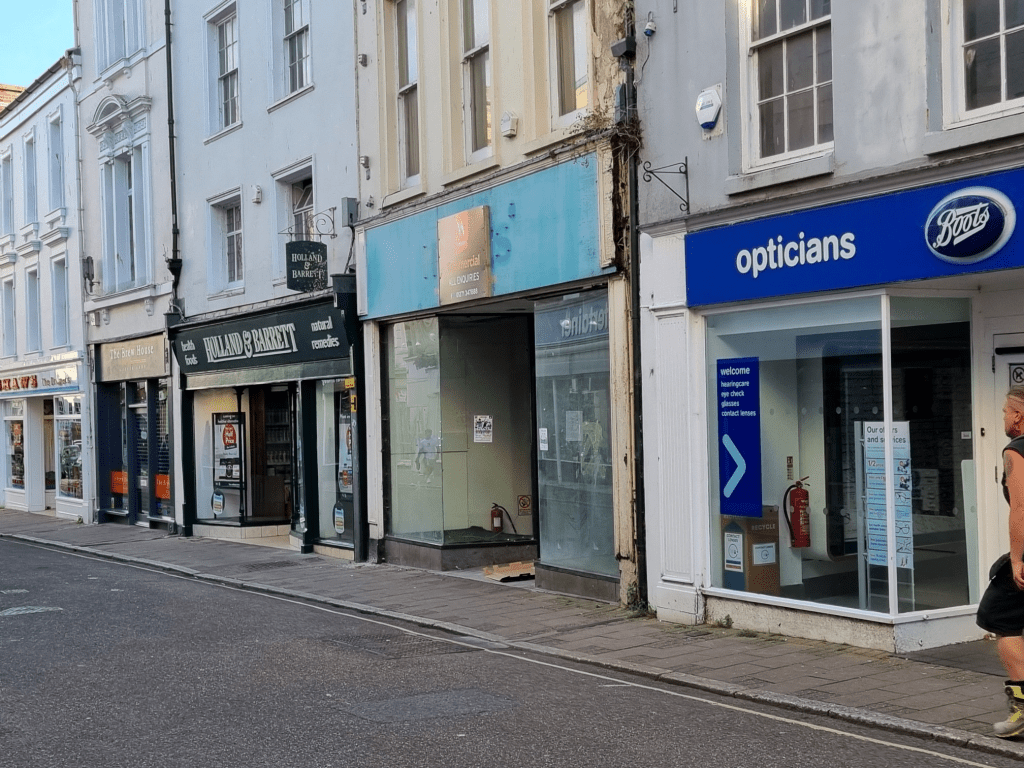
Downtown Barnstaple: not a happening place. I’m not being horrible. The food options are cheap, mostly trashy, and some of the eateries look like fronts for (ahem) other types of businesses altogether; the town itself isn’t attractive — I’m talking about the built environment, architecture, public amenity — and you get the sense that this is one of those places you don’t come to if you don’t have a functional reason or purpose to be here. Unless you happen to have been born in the nearby North Devon hospital: then you’re likely stuck here for good.
Once again, I’m not being horrible: in fact, I’m only judging the place on what is openly, and abundantly, obvious.
I wish the good people of Barnstaple every good fortune in the world, but I’m off tomorrow, and can only say I’m happy to be on my way.
But that’s travel, isn’t it? 🙂
-
Pictures, Pasties and Ice Cream: Days Well Spent in Tintagel, Cornwall
NEAR THE END of my two-day stay in Tintagel (with some reluctance to leave), it’s been time well spent in one of my favourite places on the planet: there are several such places on my itinerary during this trip, which is surely part of the point. But the work I had to do here is done; I have explored this wild, rocky part of the beauteous Cornish coast — framed by undulating fields that are still green in parts despite drought across Britain — and made my own judgements on two of the things that make Cornwall world famous: its pasties and its ice cream.
As most of us in Australia are only too well aware, drought = brown and dry, and brown and dry = fire risk: especially if some idiot flicks a cigarette butt into a clump of dry undergrowth and walks away…today the consequences of this were all too obvious, as the spectacular Cornish seascape had something unwanted added to it this morning, which smouldered away for hours despite the best efforts of local firefighters.

Not a noted tourist attraction in Cornwall, to be sure. Had it happened somewhere dry fuel loads were concentrated in far greater quantities, there’s no telling how bad the carnage might have been. Fortunately, this was at the lower end of the scale of possible adverse outcomes — and so, we move on.
I can’t sing in praise of Tintagel loudly enough; aside from the palaver of actually getting to it, as I mentioned yesterday (which, counterintuitively, is perfect for the purpose I sought to research it), it’s gorgeous, populated by friendly people, is comfortable to stay in and explore, and — unlike some places in Britain — has some pretty good food experiences on offer, although they’re not Chelsea restaurant quality, just to be clear.
As I noted yesterday I’ve been staying at the Camelot Castle Hotel, which is part-owned by renowned British artist Ted Stourton, whose paintings (and there are many) adorn the corridors, common areas, formal zones and all of the accommodation rooms at the hotel, which itself is a castle (albeit not the famed Tintagel Castle, whose ruins are picked over by Arthurian history buffs from across the world: more on that later).

The car park at Camelot features another of Ted’s artworks: his Aston Martin DB7. Purists and motoring enthusiasts, take a deep breath — the Aston has been wrapped in printed vinyl, not painted over. I’ve had the benefit of a couple of really good conversations with Ted while I’ve been here, and I’d like to stay in contact with him; despite his own success — and a reputation that rightly continues to grow — he is very available to his guests, knowledgeable about local history, and particularly keen to offer guidance and mentorship to artists in all disciplines and genres, not just painters. In this regard we had a great chat about the book projects I am working on, and I appreciated his counsel greatly. Whether aspiring creatively or simply looking for an excellent place to stay, however, Camelot Castle Hotel is deserving of patronage — not least on account of its thoroughly decent ownership and the culture of excellence that has flowed from that to the staff. Well done, and thank you!

The Great Hall at Camelot Castle Hotel, replete with a genuine harp and a “Knights of the Round Table” area. Over the past couple of days I must have walked almost twenty miles; from Camelot to the Tintagel high street is (at my brisk pace) a 20-minute return walk, and I’ve done it six times today alone. One of the great things is that everything in this delightful little village is nearby, and I don’t think walking everywhere is going to kill anyone should they choose to do so: in my own case, maybe I’ll walk off a few of the 15-20 extra pounds that appeared after I quit smoking cigarettes if this type of thing continues for the duration of my trip.
But without giving too much away (all will be revealed in due course, provided the books I’m writing are published once eventually complete) it’s been a very satisfactory visit to Tintagel for research purposes; it’s no secret this has been chosen as one of the locations for what I’m working on, but how it fits (and exactly where, in terms of a trilogy of novels) can remain a mystery to others in my view, for now at least.

Merlin’s Cave, Tintagel Beach, as seen descending down Glebe Cliff from the Tintagel high street (Atlantic Road). Nobody will ever know conclusively whether King Arthur was a real person, or simply a local legend; either way, the ancient lore of Camelot and the knights of the round table have charmed, haunted, entertained and inspired for literally hundreds of years. In some respects it doesn’t really matter whether the story is true or not: but the ruins of Tintagel Castle — reputed to be King Arthur’s seat — attract enthusiasts from across the world, and while the castle is of little interest to me in terms of my writing activities, the coast is another story: see Merlin’s Cave in the image above.
What I did discover this afternoon — almost to my chagrin — is that stories of Cornwall’s lightning-fast tides are no myth at all; I got talking to a lovely English girl between taking pictures and making notes, and within the space of 20 minutes (and being somewhat distracted) the incoming tide had advanced close to thirty feet. Interestingly, fresh tide marks inside Merlin’s Cave are visible about ten feet off the sand level: have another look at the image I’ve posted, and imagine the cave at least half full of water. As children, we read stories about the Famous Five playing on the water at “Kirrin” (which is somewhere in Cornwall — that’s a fact — but exactly where, I don’t know). Today, I got to see the surging, swirling, rising tide Enid Blyton’s characters had such fun playing chicken with for myself.
And to be sure, I wouldn’t want to get trapped on that beach after another 20 minutes or so on the incoming tide; the water isn’t as calm as it looks, and the rocks look…sharp, to say the least…
While I’ve been here, I’ve made it my business to sample (the bounds of moderation permitting) the local offer in two of the things Cornwall is famous for across the world: its pasties and its ice cream. In the case of the latter, a blackcurrant and Cornish clotted cream ice cream sealed a runaway win in my view for one of a plethora of local dairy firms with shopfronts in the high street: Kelly’s of Cornwall. If you come to this part of England, indulgence is mandatory.
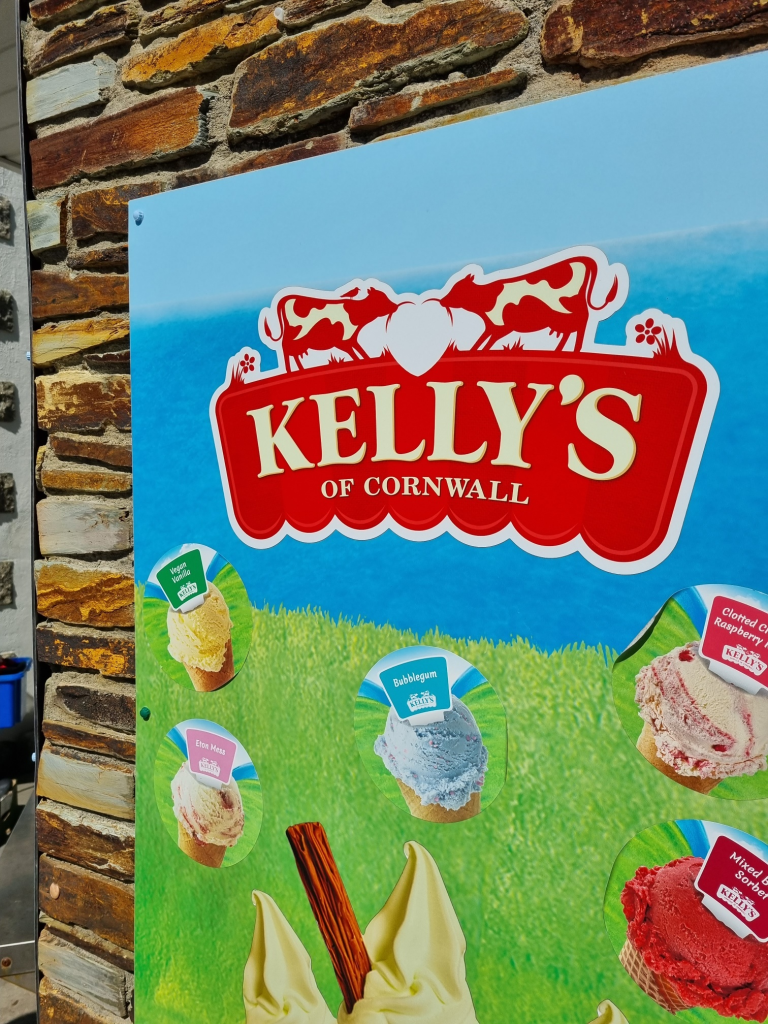
£5.50 for two scoops. Money well spent. Don’t take my word for it; come to Tintagel and try it for yourself. (As an aside, I now have upon my person a traditional recipe for making Cornish clotted cream: and with some of the premium milks now sold by specialty providores in Melbourne with high milkfat and cream content, my children and I will have a crack at making it when next they come for a weekend at my place when I get back to Australia in a few weeks’ time).
The pasties were a two-horse race: one bakery was tastier and cheaper; the other was more generous in the size of its portions. I stuck to the traditional beef, onion and potato variety that is the traditional Cornish pasty: and should you find yourself in Tintagel, pay these people a visit.

The Cornish Bakery edges out its competition across the road on the question of the best local pasty in Tintagel. My “razzy” award — a golden raspberry to the worst operator in town — has to go to English Heritage, which seems to think charging £20 to walk along the beachfront is an appropriate impost on tourists. (I didn’t pay, for the record). The same organisation was selling an “English Heritage” edition of Monopoly for £50 per set, which is utter highway robbery, notwithstanding novelty/co-branding/souvenir surcharge considerations. For the uninitiated, English Heritage and its rival, the National Trust, between them control access to many of Britain’s best-known and most sought-after attractions, be they buildings, landmarks, or (it seems) dirt and rock too. It was the National Trust that wanted £20 to get into Chartwell had I been able to get there during its truncated opening hours. Readers will note there is no endorsement, or pictorial support, for either of these organisations in this post.
And while the King Arthur’s Arms Inn looked fine, and with a good fish and chippery and several other decent-looking eateries, what started with a pizza last night finished with spicy Tuscan tomato soup and an awesome spaghetti and meatball dinner this evening: simple, rustic Italian fare that was a comforting revelation, and The Olive Garden is worth trying should you ever visit Tintagel.

Understated, simple and good — very good. The Olive Garden was a happy discovery in Tintagel. Simply stated, Tintagel has been a wonderful place to visit.
Tomorrow I’m going north, to North Devon and the township of Barnstaple, before starting my pivot northward in the more general sense later in the week, heading first to Oxfordshire and thence beyond the Midlands to the Lakes District and North Yorkshire.
And, finally, the antibiotic crimp on my activities is now 48 hours away from being dispensed with, which means I can have a drink soon — and this has prevented me from drinking the best beer on the planet, The Proper Job, an IPA Cornish Ale that simply isn’t available in Australia; more’s the pity.
But at least I’ll be able to drink the whisky when I get to Islay in ten days’ time…to do otherwise would be, as a Scottish Australian heading to the old country, an absolute bloody heresy!
-
By Tre, Pol and Pen Shall Ye Know Cornishmen…
…and for all that, I’m in Tintagel; it doesn’t sound like it lives up to the billing really, until one notes it’s actually known locally as Trevena: and so, like scores of other towns and hamlets across Britain’s rugged, beautiful south-west, Tintagel fits the formula by which shall ye know Cornishmen.
For the first time in the week and a half since I arrived in Britain, it’s actually pleasantly cool; part of this derives from the fact the first couple of places I stayed in after leaving London were heritage listed out of being allowed to install air conditioning in their buildings (does this shit sound familiar to readers in Melbourne?), and part of it derives from the fact I’m on the coast, with an open window, and a lovely seaside breeze is filtering pleasantly into my room.
But first things first: I posted a picture of sunset over the River Exe in Topsham last night; perhaps sunset shots will become a mainstay of the remainder of this trip — and perhaps they won’t — but here’s one overlooking the water from my hotel.

Sunset over the water as seen from Tintagel, Cornwall. What a labyrinthine, convoluted place Cornwall is; on my last trip to Britain I stayed in Penzance (about 40 minutes further south on the M5 Motorway) which is literally a drive-in, drive-out type of destination; Tintagel is a different proposition altogether, with the last 20 miles of my drive after leaving the M5 spent navigating spidery laneways barely wide enough for one vehicle, let alone two, at speeds of less than 20 miles per hour and on roads probably unfit to travel on even that quickly. And after leaving the M5 at Launceston (pronounced “Lansen”, for the benefit of any Taswegians reading), perhaps 30 different towns were signposted — and passed — en route to Tintagel.
And then…as if from nowhere, a thriving, bustling little town centre sprang into view; I took some photographs of it after businesses began closing, as today was a Bank Holiday in Britain, and the high street you see below was teeming with thousands of people just a few hours ago.
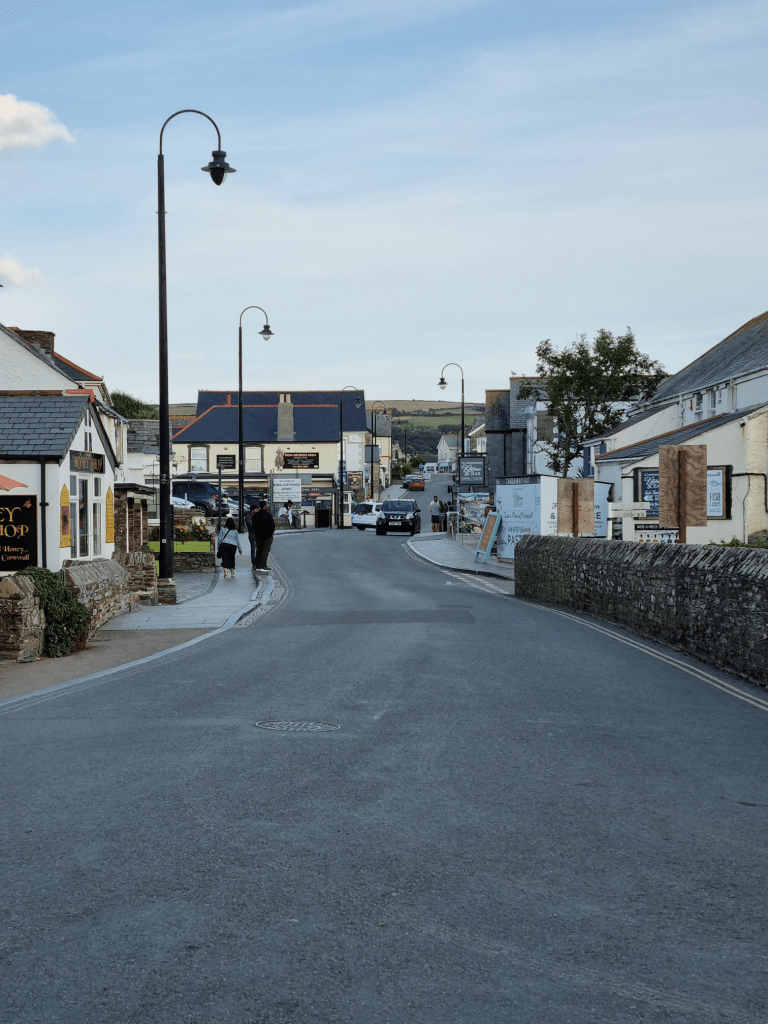
Thousands flocked to Tintagel for the August Bank Holiday today…and thankfully, most of them were gone by 7pm. I’m staying in an old castle — the Camelot Castle Hotel — and I expect I may have more to report on this when next I post; I met the owner this evening (who lives onsite), and he’s given me a tantalising snapshot of the history of the place, but I expect there’s a lot more to be learned. I’m catching up with him again tomorrow, but already I know, for example, that a Dracula film was shot here; Sir Edward Elgar wrote one of his symphonies whilst staying here; other luminaries over the past two centuries have ties to the property; and even monks have a connection to it through their work at the old Tintagel Castle — now in ruins on an island just off the Tintagel coast — stretching back centuries.

The Camelot Castle Hotel, Tintagel, as seen this afternoon as I arrived and readied to check in. What I have also learned (and this is where I become a bit subterranean and euphemistic about what I say) is that what I have already ascertained about the area, its history, and those of its features that are little-known these days — after all, this place has a history stretching back well over 1,000 years — are perfect for the purpose I wanted to research for one of my novels.
Tintagel was the legendary seat of King Arthur: its high street is filled with merchants selling everything from wizardry artefacts based on Merlin to eponymous pubs and cafes seeking to eke out a living by trading off the Arthurian past.

If nature calls in Tintagel, be sure to have your 20p ready: I was astonished (and disgusted) to see this barrier at the entrance to a “public” toilet block. Apparently it’s to offset the cost of water. In reality, it’s despicable. Frankly, I thought the pizza dinner I had at the Olive Garden — a lovely Italian-run bistro at the eastern end of the high street — was better than what any of these establishments might offer. The model for designing and ordering pizza was a masterstroke: here’s your basic margherita pizza for £9; now add ingredients to it for £1 apiece.
I’m not going to specify which ingredients I added — I don’t want to fuel the bullshit debate about whether pineapple belongs on pizza, for example, or whether in fact anything aside from tomato, cheese and basil belongs on it at all.
People should order what they like, and what tastes good. It is a matter of fact that irrespective of whatever does or doesn’t “belong” on pizza, there are thousands of purveyors of bloody awful pizza worldwide that isn’t fit to feed the dog if taste is the main criterion on which it is judged. To that end, I am happy to report the fare at the Olive Garden was delicious. It was regrettable when the last bite was the only one left on my plate.
I’ll be back to post again tomorrow, and perhaps I’ll show a little more of where I’m staying. But it’s great to be back in Cornwall, and tomorrow is a big day in terms of detailed, painstaking research to ensure I can write authoritatively about the place when I go back to Melbourne — even though the option to walk down the main street, for example, won’t be available on a whim — and even if it takes a little while to get to the third of the three novels I’m working on.
After all, the first one is only just nearing the point I can start to think about tarting it around to prospective publishers. There’s more to do in the series before I get onto what I have in mind to set here 🙂
-
Subscribe
Subscribed
Already have a WordPress.com account? Log in now.
 Return To Britain 2022